
CNC Router Guide » An Introduction to Japanese CNC Routers » Key Features & Advantages of Japanese CNC Routers
Key Features & Advantages of Japanese CNC Routers
Table of Contents
When it comes to CNC routers, Japan has earned a global reputation for engineering excellence. Built on a long history, Japanese CNC routers are quickly becoming the tool of choice for American manufacturers seeking reliability, cost-efficiency, and precision.
Whether you're machining aerospace components, crafting signage, or fine-tuning consumer electronics, Japanese-made routers offer a compelling blend of performance and longevity that few global competitors can match.
The Rise of Japanese CNC Routers
The history of CNC routers in Japan dates back to the late 1950s, when American NC (Numerical Control) technology was first introduced. Over the next two decades, NC systems began to integrate with computer technology, evolving into full-fledged CNC (Computerized Numerical Control) systems by the 1970s.
From the late 1980s through the 1990s, Japanese CNC routers made significant strides in software development—transitioning from 2D to 3D machining, and eventually mainstreaming advanced capabilities like 5-axis control.
In the 2000s, Japanese manufacturers expanded globally by establishing overseas production facilities and forming strategic alliances and joint ventures. Today, Japanese CNC routers are in high demand across industries such as automotive, aerospace, home electronics, and signage—thanks to their consistent quality and technical innovation.
Source: Japan Machine Tool Importers’ Association(https://www.jmtia.gr.jp/uploads/history65.pdf)
Three Core Advantages of Japanese CNC Routers
1. High Precision: Achieve Ultra-Fine Machining
Japanese CNC routers combine rigid machine structures with sophisticated control systems to deliver outstanding precision. The integration with CAD/CAM systems minimizes dimensional deviations, ensuring accuracy throughout the production process.
This high-precision capability enables the machining of intricate components and complex geometries, delivering exceptionally smooth and visually appealing surface finishes.
2. High Durability: Reliable Long-Term Operation
Designed with rigidity and vibration suppression in mind from the very beginning, Japanese CNC routers are engineered to withstand stress and minimize breakdowns.
Thanks to carefully selected high-quality components and a meticulous assembly process, these machines offer long-term stability with minimal wear or loss of accuracy—even during extended continuous operation. Maintenance is also straightforward, contributing to consistent performance over many years.
3. Advanced Functionality: Cutting-Edge Technology Built-In
Japanese CNC routers are equipped with state-of-the-art features such as 5-axis control, automatic tool changers (ATC), and IoT-enabled monitoring systems, allowing them to handle a wide range of materials and geometries. With just a software program update, operators can switch between different product types quickly and efficiently.
User-friendly interfaces prioritize both operability and safety, while energy-saving functions and network connectivity contribute to increased productivity.
What’s more, Japan’s manufacturing culture emphasizes lean practices—such as the "just-in-time" Kanban system—promoting compact, efficient design. Japanese CNC routers reflect this philosophy, often featuring space-saving multifunctional layouts and highly versatile configurations that are well-suited for complex workflows within limited factory space.
Why Japanese CNC Routers Offer Superior Cost Performance
Japanese CNC routers are known for their multifunctional capabilities, allowing them to handle multiple processes in a single machine. With high precision and broad machining compatibility, a single unit can manage a wide range of parts and applications—making it easier to reduce upfront investment costs.
Additionally, their durability and easy maintenance contribute to long-term savings. Lower maintenance fees and fewer breakdowns mean reduced repair costs over time. Taken together, these advantages make Japanese CNC routers an excellent investment in terms of total cost performance.
What Sets SHODA Apart
SHODA is a company striving to become the world’s leading manufacturer of CNC routers. Its offerings go beyond machine production to include software, peripheral equipment, and full after-sales service.
The company’s origins trace back to 1926 with the founding of Shoda Ironworks. In 1968, under the leadership of its second-generation president, Isao Shoda, the company developed its first CNC router.
As of November 2023, SHODA has shipped over 8,000 units worldwide. The company continues to refine its machines to support the machining of lightweight materials—an area where CNC routers excel.
Summary: The Strengths of Japanese CNC Routers
Japanese CNC routers fall broadly into two categories: those developed by machine tool manufacturers and those developed by electronics companies.
The former group tends to integrate the latest innovations and customize machines based on specific tooling applications. The latter group often focuses on general-purpose machines that are sold to a variety of tool manufacturers.
Each approach has its merits. However, if your priorities include high precision, advanced functionality, and long-term durability—hallmarks of Japanese craftsmanship—the first type is likely the better fit.
This media is sponsored by The SHODA Company
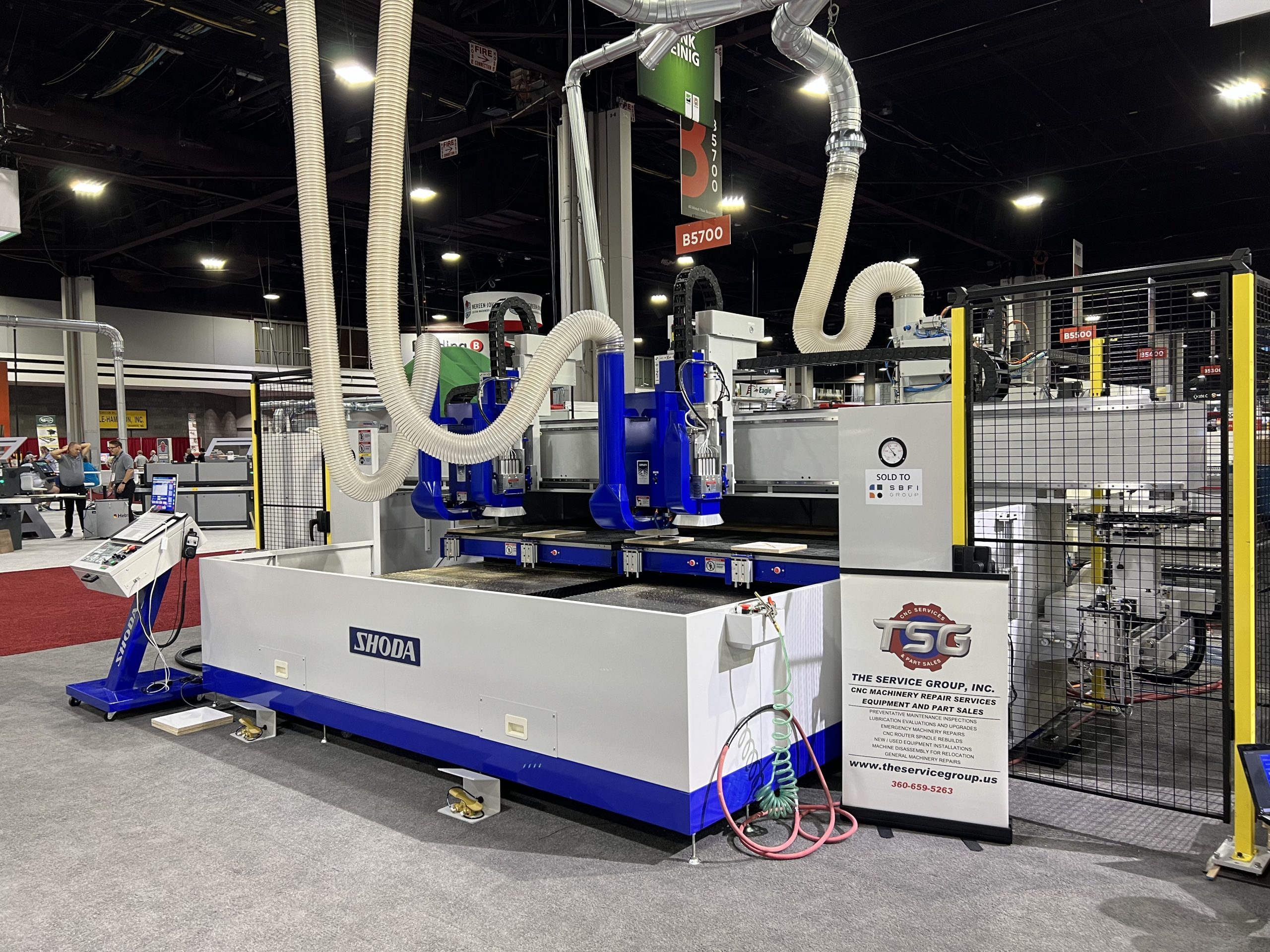
A Pioneer in Japanese CNC Router Technology
SHODA has been in business since 1926 and was the first company in Japan to develop an NC router. With a long history of precision machining, the company’s CNC routers are used to process a variety of materials—such as plastics, resins, and lightweight metals—with proven accuracy and reliability.
In 2014, SHODA developed a new type of NC router that doesn’t produce cutting dust. In many manufacturing environments, dust from machining can pose serious health risks if inhaled over long periods. SHODA’s solution to this issue has gained attention worldwide and is now used across the U.S., Europe, and Asia.