
Polyacetal (POM)
Key Properties and Advantages of POM
High Mechanical Strength and Stiffness
Polyacetal (POM) is widely used in engineering applications due to its high mechanical strength and stiffness. Its high crystallinity results in tightly packed polymer chains, creating a rigid structure that helps resist deformation under load. This inherent stiffness can make POM a suitable alternative to metal components in various assemblies, enabling substantial weight reduction without compromising performance.
One of POM’s most significant mechanical advantages is its strong resistance to creep and fatigue. Creep is the tendency of a material to deform gradually under sustained stress, while fatigue refers to failure caused by repeated cyclic loading. POM can retain its shape and integrity even under long-term pressure or repetitive motion over extended periods. As a result, POM is often selected for high-load mechanical parts—such as gears, springs, and fasteners—where reliable performance is required throughout the product lifecycle.
Low Friction and High Wear Resistance
A notable characteristic of POM is its low coefficient of friction and strong wear resistance. The material has self-lubricating behavior, allowing it to slide against other surfaces—including metals and other plastics—with reduced resistance and lower heat generation. This property is particularly relevant for components involving sliding or rotating motion, such as bushings, rollers, and conveyor links.
In many designs, POM can reduce or eliminate the need for external lubricants such as oil or grease, which is a significant advantage in sensitive environments such as food processing or electronics manufacturing where contamination must be avoided. In addition, specialized sliding grades have been developed to further improve these tribological properties, reduce noise, and extend the service life of moving parts in demanding industrial applications.
Dimensional Stability and Low Moisture Absorption
Dimensional stability is critical in precision engineering, and POM performs well under changing environmental conditions. Unlike some engineering plastics such as nylon, which can swell and lose strength as they absorb water, POM has low moisture absorption. This helps POM components remain dimensionally stable and maintain tight tolerances even in humid or submerged environments.
In addition to moisture resistance, POM provides broad chemical resistance to many organic solvents, automotive fuels, and strong alkalis. It remains stable when exposed to oils and alcohols, which makes it essential for fuel system components. However, POM is sensitive to strong acids and oxidative agents, so material compatibility should be confirmed for the intended chemical environment. Its combination of thermal stability and environmental resistance allows it to deliver consistent performance across a wide temperature range, from sub-zero conditions to moderately heated environments.
Homopolymer vs. Copolymer: Selecting the Appropriate Type
Structural Differences and Trade Names (Delrin vs. Hostaform/Celcon)
Understanding the fundamental differences between homopolymer acetal (POM-H) and copolymer acetal (POM-C) is critical for engineering projects. Although both are classified as polyacetal, their molecular chain structures differ substantially. POM-H is produced by polymerizing formaldehyde and has a linear structure of repeating oxymethylene units, with the chain ends end-capped to improve stability. In contrast, POM-C is produced by copolymerizing trioxane with a second monomer (comonomer). This comonomer introduces carbon–carbon bonds into the polymer backbone, which function as “stoppers” that help prevent depolymerization (“unzipping”) when the material is exposed to thermal or chemical stress.
In global markets, these types are often recognized by established trade names. Delrin® (manufactured by DuPont) is a well-known example of a homopolymer acetal and is associated with a high degree of crystallinity. By contrast, Hostaform® and Celcon® (manufactured by Celanese), as well as Duracon® (manufactured by Polyplastics), are leading copolymer brands. One important physical difference frequently encountered during manufacturing is centerline porosity. In homopolymer acetal—particularly in thick extruded shapes—the core can exhibit lower density and may contain small bubbles or voids. Copolymer acetal is far less prone to this porosity, which is why it is often preferred for medical and food-contact applications where liquid or gas permeation must be avoided for hygiene and safety.
Comparison of Physical and Chemical Properties
From a mechanical standpoint, homopolymers and copolymers each offer distinct advantages. In general, POM-H exhibits approximately 10% to 15% higher tensile strength and stiffness than POM-C. Because of its higher crystallinity, POM-H also has a higher melting point and greater Rockwell hardness, and it demonstrates exceptionally strong resistance to fatigue and creep. For this reason, POM-H can be an advantageous choice for high-load mechanical parts—such as small gears and springs—where maximum elastic recovery is required. However, these strength benefits involve a trade-off in processing stability: homopolymers can be more susceptible to thermal degradation if held at elevated temperatures for extended periods during molding.
POM-C offers advantages in chemical and environmental resistance. While homopolymers tend to provide higher stiffness at room temperature, copolymers are better suited to long-term performance under harsh conditions. Copolymer acetals provide improved resistance to hot water, strong alkalis, and oxidative degradation. As a result, POM-C is commonly used for plumbing components, valves, and automotive parts exposed to aggressive cleaning agents or coolants. In addition, copolymers often exhibit better dimensional stability during machining because they are less affected by internal stresses and porosity-related issues. Designers should carefully evaluate whether maximum mechanical strength (homopolymer) or broader chemical resistance and processing reliability (copolymer) is the primary requirement for the application.
Diverse Applications Across Industries
Automotive and Transportation
The automotive industry is one of the largest consumers of polyacetal (POM) due to the material's remarkable resistance to automotive fuels, oils, and greases. POM is a critical component in fuel system parts, such as fuel sender units, tank caps, and valves, where long-term chemical stability is non-negotiable. Its ability to maintain mechanical integrity under a wide range of temperatures makes it ideal for under-the-hood applications and chassis components.
Beyond the engine bay, POM is extensively used in interior and exterior door systems, seat belt mechanisms, and window lift systems. Automotive engineers frequently select POM for moving parts like motor gears and door handles because of its "self-lubricating" nature and low noise production during operation. By integrating multiple functions into a single molded POM part, manufacturers can reduce the number of components, simplify assembly processes, and achieve significant weight savings, which is increasingly important for improving fuel efficiency and electric vehicle range.
Industrial Machinery and Precision Components
In the realm of industrial engineering, POM is the "go-to" material for precision components that require high dimensional stability and wear resistance. It is commonly found in gears, cams, bushings, and rollers where smooth, repetitive motion is required. Because POM absorbs very little moisture, it remains reliable in high-humidity factory environments where other plastics might swell or lose their tight tolerances. This precision is vital for the smooth operation of conveyors, disk drives, and high-speed automated machinery.
Furthermore, POM is frequently used to replace metal screws, bolts, and fasteners. These plastic fasteners offer the advantage of being corrosion-resistant and non-conductive, while still providing the necessary strength for structural assembly. In the construction industry, POM's durability and spring-like properties are exploited in window sash components, sliding door wheels, and water-supply valves. Its versatility allows it to bridge the gap between heavy-duty industrial hardware and delicate precision instruments, providing a reliable solution for force transmission systems.
Food Contact and Medical Grade Solutions
For the food and medical sectors, POM-C (copolymer) is often the preferred choice due to its lack of centerline porosity and excellent resistance to hot water and cleaning agents. Specialized grades are manufactured to comply with stringent FDA, USDA, and NSF standards, ensuring they are safe for direct contact with food and beverages. Common applications include food processing conveyor links, milk-processing equipment, and various components in commercial kitchen appliances where hygiene and durability are paramount.
In the medical field, POM's high stiffness and resistance to solvents make it an excellent candidate for medical delivery devices such as inhalers, insulin pens, and surgical instrument handles. The material's ability to withstand repeated sterilization cycles without losing its mechanical properties is a significant advantage. Additionally, the development of "metal-detectable" POM grades has been a breakthrough for the food packaging industry; these grades contain additives that allow plastic fragments to be detected by standard metal detectors, significantly reducing the risk of product contamination and ensuring consumer safety.
Sustainability and the Future of POM
Carbon Footprint and Environmental Impact
Amid global efforts to address climate change, polyacetal (POM) has attracted attention for its relatively low environmental burden. From a chemical standpoint, POM is represented by the formula (CH2O)n, and its carbon content is only about 40%. This is substantially lower than that of general-purpose plastics such as polyethylene, whose carbon content reaches approximately 85%. This lower carbon ratio suggests that, across its full lifecycle—from manufacturing through disposal—POM inherently has a smaller carbon footprint than many other commonly used polymers.
In addition, POM is seldom used in disposable “single-use” plastic applications. Instead, its high durability and wear resistance mean that POM components are designed for long-term use in machinery and vehicles. This extended service life is an important pillar of sustainability because it reduces replacement frequency and helps minimize waste generation. Replacing metal parts with lightweight POM can also contribute to energy savings in the transportation sector, which can further reduce the overall environmental impact of the end product.
Innovations in Biomass-Based and Low-Carbon POM
The future of POM is becoming increasingly “green” through innovations in raw-material sourcing. Traditionally, the methanol used in POM production has been derived from fossil fuels. Today, however, major manufacturers are introducing bio-based POM that uses biomass-derived feedstocks, including those obtained from the fermentation of organic waste. Companies such as Celanese and Asahi Kasei use a “mass-balance” approach and offer grades such as POM ECO-B that contain up to 97% renewable content. These materials are described as “drop-in” solutions because they provide the same quality and performance as conventional grades, enabling substitution without product re-evaluation (re-qualification/re-certification).
Another significant industry development is the use of carbon capture and utilization (CCU) technology. By capturing emitted CO2 or using methane generated from livestock operations and wastewater treatment facilities, manufacturers can produce methanol with a lower carbon intensity. This process not only reduces reliance on fossil fuels but also supports the management of methane, a greenhouse gas that is more potent than CO2. Sustainable options such as POM ECO-C can enable industry to meet renewable-content targets while maintaining the high mechanical standards required for engineering applications.
Molding and Processing Methods for POM
Injection Molding Considerations
Injection molding is the most common method for producing POM components; however, it requires careful control due to the material’s high crystallinity. One of the most important factors is shrinkage. During cooling, POM typically exhibits a relatively high molding shrinkage rate of approximately 2%. Because the exact shrinkage depends on molding conditions and part geometry, engineers must precisely adjust mold temperature and injection pressure to maintain tight tolerances. To support this, “high-cycle grades” are available that use crystal nuclei to accelerate solidification, reducing cooling time and improving production efficiency.
Temperature control and venting are also critical. If the molten resin is held for an extended period in a high-temperature barrel, thermal degradation may occur and formaldehyde gas can be generated. This can degrade material properties and may also contaminate mold surfaces. Appropriate venting is essential to prevent short shots and to ensure that trapped gases do not cause surface defects or contribute to material degradation. By balancing heat input for melting with efficient heat removal for solidification, manufacturers can produce high-quality parts free of internal defects and voids.
Machining and Secondary Operations
For low-volume production or prototyping, POM is often supplied in forms intended for machining, such as rods, slabs, or sheets. POM is known for excellent machinability, enabling high-speed cutting and the production of components with complex geometries and tight tolerances. However, because it has low surface energy and a “slippery” surface, bonding with standard adhesives is extremely difficult. For painting, printing, or adhesive bonding, surface activation—such as corona treatment, flame treatment, or chemical etching—is commonly required to ensure adequate adhesion.
For assembly, POM is a highly versatile material. It is suitable for a range of methods, including mechanical fastening with screws, snap-fit joints that utilize its inherent elasticity, and ultrasonic welding. Because POM is resistant to organic solvents and oils, the stability of secondary treatments can be maintained over the product’s service life. Whether used in high-volume injection molding or precision machining, understanding these processing considerations enables manufacturers to maximize POM’s potential as a high-performance alternative to metal and other conventional materials.
Conclusion: The Future of High-Precision Engineering with POM
Polyacetal (POM) continues to be an indispensable material in modern manufacturing, providing a unique combination of strength, dimensional stability, and low friction that is not found in many other plastics. Whether an application requires the high tensile strength of a homopolymer (POM-H) or the superior chemical resistance of a copolymer (POM-C), selecting an appropriate grade is critical to project success. As industry transitions toward a more sustainable future, the development of biomass-derived and low-carbon POM supports the expectation that this versatile “problem-solving” material will remain a cornerstone of engineering for decades to come.
This media is sponsored by The SHODA Company
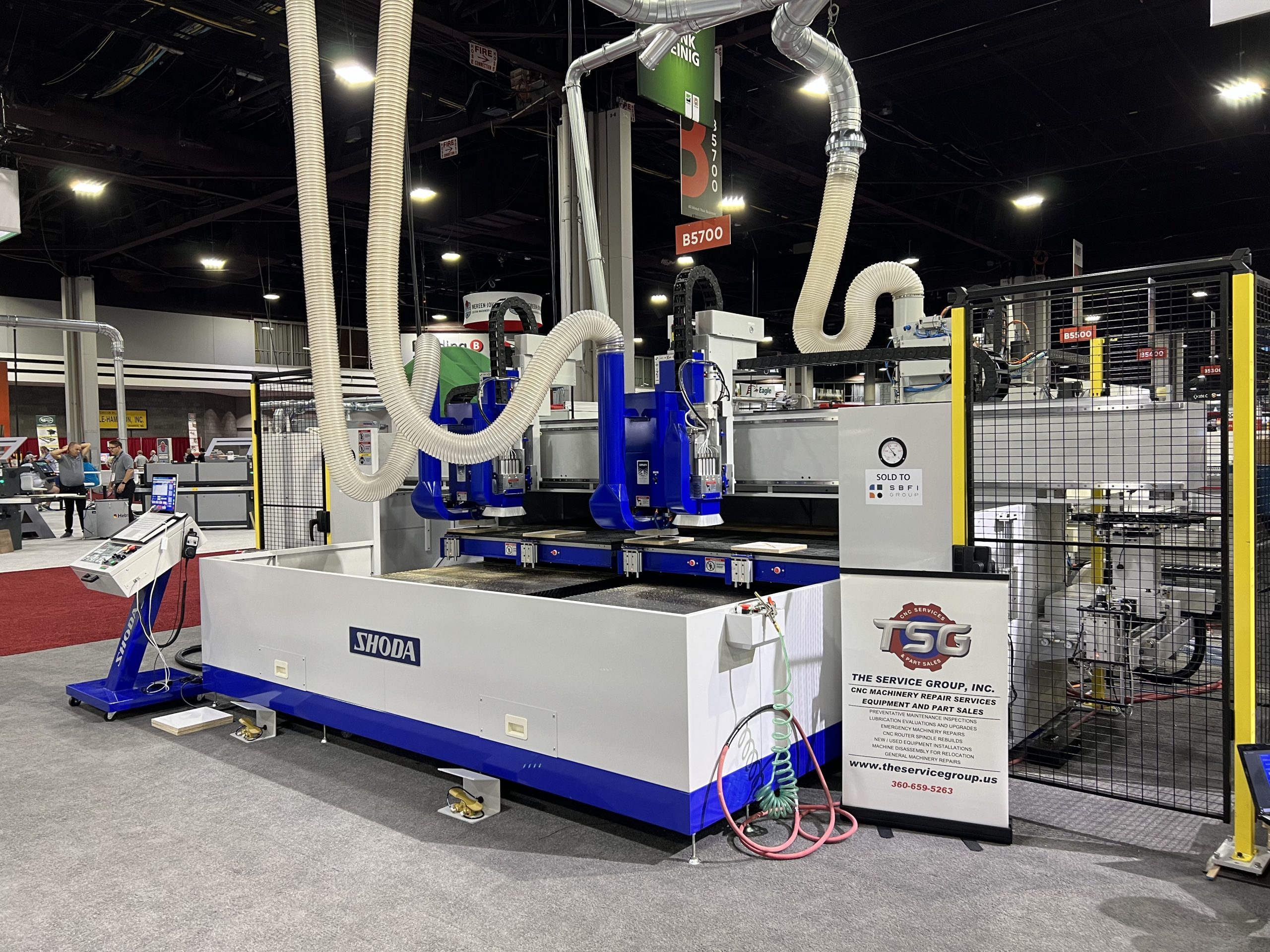
A Pioneer in Japanese CNC Router Technology
SHODA has been in business since 1926 and was the first company in Japan to develop an NC router. With a long history of precision machining, the company’s CNC routers are used to process a variety of materials—such as plastics, resins, and lightweight metals—with proven accuracy and reliability.
In 2014, SHODA developed a new type of NC router that doesn’t produce cutting dust. In many manufacturing environments, dust from machining can pose serious health risks if inhaled over long periods. SHODA’s solution to this issue has gained attention worldwide and is now used across the U.S., Europe, and Asia.