
CNC Router Guide » Applications of Japanese CNC Routers
Applications of Japanese CNC Routers
This section showcases examples of how CNC routers manufactured in Japan are used to machine different types of materials. Each material presents its own set of challenges in the cutting process, and the benefits of using Japanese-made CNC routers vary accordingly. If you are considering implementing a CNC router in your facility, we recommend reviewing the material-specific examples to find the most relevant applications for your operations.
Features and Benefits of CNC Routers Manufactured in Japan
Japanese CNC routers are equipped with advanced capabilities such as 5-axis control, automatic tool changers (ATC), and IoT-based monitoring systems. These features enable precise control over tool paths, cutting speeds, and tool angles based on digital design data.
As a result, they offer high-precision machining even for intricate shapes and fine details, while minimizing dimensional deviations. Additionally, these machines are engineered with rigidity and vibration control in mind from the design phase, contributing to exceptional durability and highly stable performance.
Machining Plastic Materials
This section presents case studies of machining plastic materials—such as acrylic sheets, glass epoxy resin, and urethane foam—using CNC routers manufactured in Japan.
It also explains the unique characteristics of plastic machining and highlights the advantages of using Japanese CNC routers for such applications. A variety of plastic types that can be machined with CNC routers are introduced as well, making it a valuable reference for your production planning.
Machining Wood Materials
This article introduces case studies of using CNC routers manufactured in Japan to machine various wood materials, such as laminated particle boards, chair leg components, and electric guitar bodies.
It also explains the unique characteristics of wood machining and highlights the advantages of using Japanese CNC routers for such applications. The article further outlines several machining techniques specific to woodworking with CNC routers, making it a must-read for professionals in the field.
Machining Metal Materials
Here, you’ll find examples of using Japanese CNC routers for machining metals such as aluminum nameplates and cast molds.
The article discusses key features unique to metal machining that differ from other metalworking processes. It also explains the benefits of using Japanese CNC routers for metal applications, along with the specific cutting methods suited for machining metal with CNC equipment.
CNC Routers for Polyvinyl Chloride (PVC)
Rigid PVC is widely used in modern fabrication—but machining it profitably and safely requires a deep understanding of both the material and your CNC router.
This comprehensive guide breaks down PVC’s unique properties, outlines key safety precautions, and provides an up-to-date overview of U.S. market trends and the latest machine recommendations for 2025 and beyond.
CNC Routers for Monomer Cast Nylon (MC Nylon)
MC nylon offers superior mechanical properties compared to extruded nylon, but machining it requires careful attention to heat, humidity, and finishing processes. In this guide, we highlight how CNC router machining brings out the best in MC nylon while addressing its unique challenges.
CNC Routers for Polycarbonate
Machining polycarbonate can deliver clear, strong parts, but only if your CNC router meets key requirements. From spindle speed and rigidity to chip evacuation and toolpath planning, this guide shows best practices for smooth, accurate results without melting or burrs.
CNC Routers for Chemical Wood
Chemical Wood, also known as polyurethane tooling board, is a synthetic modeling material perfect for CNC machining. Unlike natural wood, its uniform structure allows predictable cutting in any direction, making it ideal for precision prototypes, FRP molds, and automotive parts. This comprehensive guide covers everything from optimal spindle speeds and feed rates to tool selection and troubleshooting common challenges like edge chipping and surface finish issues.
Acrylonitrile Butadiene Styrene (ABS)
Acrylonitrile Butadiene Styrene (ABS) is a widely utilized engineering thermoplastic known for its impact resistance and processability. This technical guide details ABS material properties, manufacturing methodologies, and critical applications across the automotive, electronics, and 3D printing sectors. It further analyzes the material's advantages, limitations, and recyclability profile for industrial procurement.
Polypropylene (PP)
Polypropylene (PP) is the world's second-most produced plastic, with 45 million metric tons manufactured annually. This guide explores PP's types, properties, and applications across packaging, automotive, medical, and consumer goods industries. Learn about its advantages like lightweight strength and chemical resistance, plus limitations including UV sensitivity and environmental concerns.
Polymethyl Methacrylate (PMMA / Acrylic)
Polymethyl Methacrylate (PMMA), commonly known as Acrylic, is the premier choice for applications requiring glass-like transparency and superior weatherability. This guide details the critical differences between cast and extruded grades for CNC machining, ensuring precise results for signage, automotive, and architectural projects. Explore its optical properties, finishing potential, and best practices for cutting this rigid thermoplastic.
Polyacetal (POM)
Polyacetal (POM) is a leading engineering plastic offering metal-like strength and exceptional dimensional stability. Available in two primary forms—homopolymer (POM-H / Delrin®) and copolymer (POM-C / Hostaform®)—selecting the right grade is critical to application success. This guide covers its self-lubricating properties, chemical resistance, and versatile use across automotive, industrial, and medical sectors as a reliable metal replacement.
From injection molding shrinkage management to CNC machinability, explore the processing best practices and the growing availability of bio-based grades that are shaping the sustainable future of precision engineering.
High-Density Polyethylene (HDPE) for CNC Routing
High-density polyethylene (HDPE) is a lightweight, durable thermoplastic often used in CNC routing for parts that require moisture resistance, chemical resistance, and reliable performance. Common CNC-routed HDPE applications include panels, liners, guards, tank components, and outdoor parts.
This guide explains HDPE’s key properties, common CNC-routed applications, important limitations, and grade selection considerations. If you are comparing materials for industrial or fabricated parts, it can help you determine whether HDPE is the right fit for your application.
Low-Density Polyethylene (LDPE) for CNC Routing
Learn which CNC router features help control heat, chips, workholding, and dimensional accuracy when machining flexible LDPE parts for production.
Ultra-High-Molecular-Weight Polyethylene (UHMW / UHMW-PE) and CNC Router Processing
Ultra-high-molecular-weight polyethylene (UHMW / UHMW-PE) is a durable engineering plastic known for its abrasion resistance, impact strength, low moisture absorption, and low friction. It is often used for wear strips, guide rails, liners, conveyor components, slide plates, and other parts that need to move smoothly or withstand repeated contact.
UHMW-PE can be machined with a CNC router, especially when supplied as sheet or plate stock. Because the material is slippery and relatively flexible, stable workholding, sharp tools, efficient chip evacuation, and heat control are important for clean cutting.
Polyether Ether Ketone Guide
Polyether ether ketone, commonly known as PEEK, is a high-performance thermoplastic used when standard engineering plastics cannot meet demanding requirements for heat resistance, mechanical strength, chemical resistance, or dimensional stability. It is often considered for aerospace, automotive, medical, semiconductor, electronics, chemical processing, and precision industrial applications.
This guide explains the key properties of PEEK, common applications, major material grades, and processing methods such as injection molding, extrusion, CNC machining, and 3D printing. It also outlines PEEK’s advantages, limitations, and selection points to help engineers evaluate whether PEEK is the right material for demanding operating environments.
G-10 and FR-4 Garolite for CNC Router Machining
G-10 and FR-4 are glass-reinforced epoxy laminates valued for their mechanical strength, electrical insulation, dimensional stability, and low moisture absorption. Common applications include insulating panels, terminal boards, spacers, fixtures, and structural components. FR-4 is generally selected when flame-retardant performance is required, while G-10 is commonly used when mechanical strength and electrical insulation are the primary requirements.
Polytetrafluoroethylene (PTFE) for CNC Router Machining
Polytetrafluoroethylene (PTFE), often associated with the Teflon brand, is valued for its chemical resistance, low friction, electrical insulation, and broad service temperature range. It can be machined on a CNC router into seals, gaskets, liners, insulators, and other industrial parts.
This guide covers PTFE properties, applications, machining challenges, tooling, workholding, grade selection, and the CNC router capabilities needed to achieve accurate dimensions and clean edges.
Choosing the Right CNC Router for Your Application
When selecting a CNC router, it's important to consider the material you'll be working with and choose a machine suited to those characteristics.For instance, in woodworking applications where materials tend to be softer, you’ll want to ensure the machine offers high spindle speeds and a lightweight design that enables smooth, intricate curved cuts.
For metal machining, which involves harder materials, look for machines with high rigidity, vibration control, high-torque spindles, and effective cooling features. For plastics, which are sensitive to heat, it’s best to use routers with low-temperature management and efficient chip evacuation systems.By keeping these key factors in mind, you can make a well-informed decision that balances efficiency, durability, and overall cost-effectiveness.
This media is sponsored by The SHODA Company
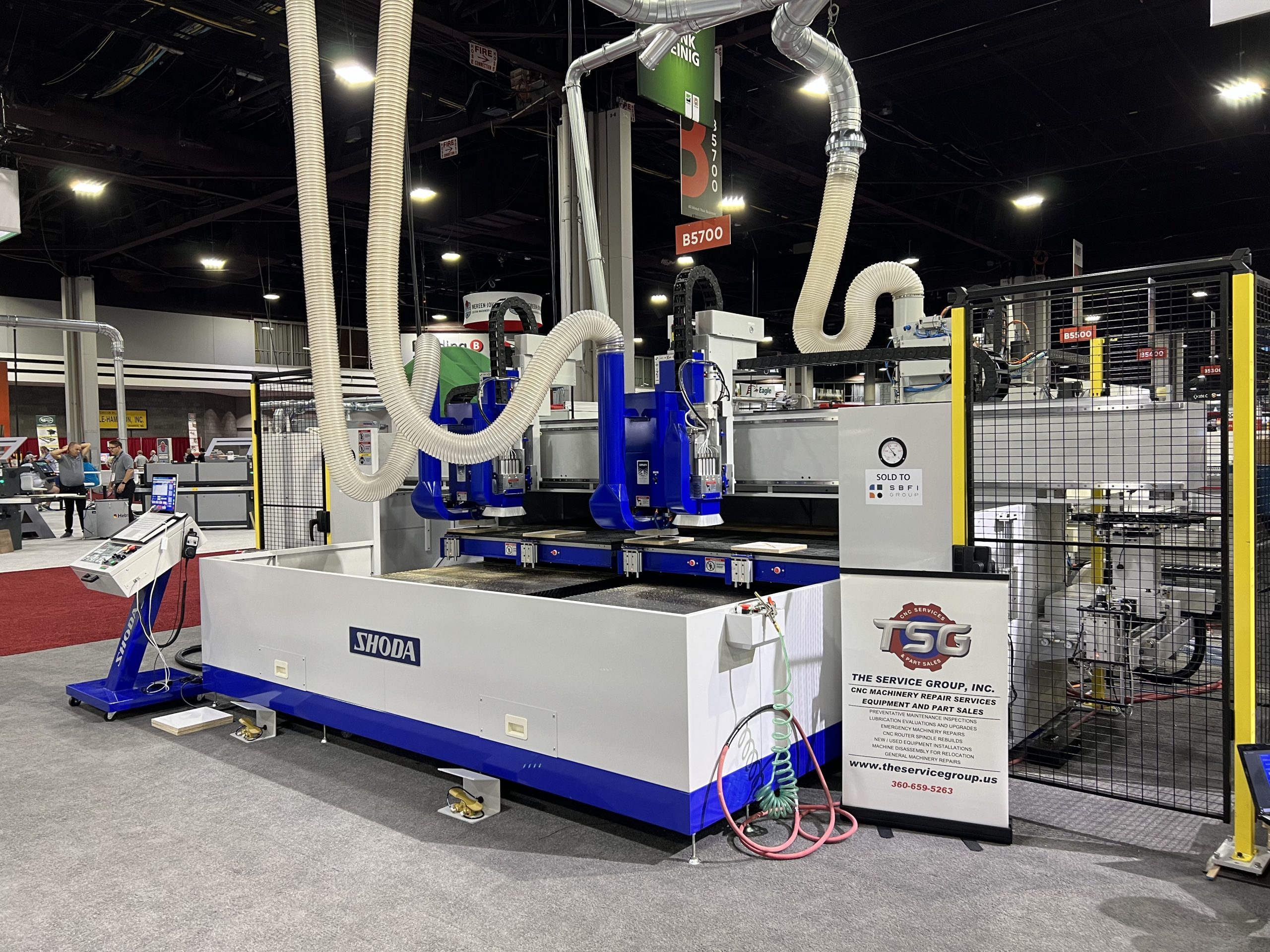
A Pioneer in Japanese CNC Router Technology
SHODA has been in business since 1926 and was the first company in Japan to develop an NC router. With a long history of precision machining, the company’s CNC routers are used to process a variety of materials—such as plastics, resins, and lightweight metals—with proven accuracy and reliability.
In 2014, SHODA developed a new type of NC router that doesn’t produce cutting dust. In many manufacturing environments, dust from machining can pose serious health risks if inhaled over long periods. SHODA’s solution to this issue has gained attention worldwide and is now used across the U.S., Europe, and Asia.