
Polypropylene(PP)
Today, polypropylene stands as the second most widely produced plastic globally, with demand reaching approximately 45 million metric tons annually. This staggering figure continues to grow year after year as industries discover new applications and consumers increasingly rely on products made from this remarkable material. Its popularity stems from a unique combination of properties: it's lightweight yet strong, resistant to chemicals and moisture, safe for food contact, and relatively inexpensive to produce.
What is Polypropylene? An Overview
Understanding the Basics
Polypropylene (PP) is a thermoplastic polymer synthesized through the polymerization of propylene monomers. Structurally, this material consists of linear carbon chains with methyl groups appended to alternating carbon atoms. This molecular configuration yields a versatile high-performance material with physical properties that can be precision-engineered for diverse industrial applications.
The classification of polypropylene as a "thermoplastic" is foundational to its industrial utility. Unlike thermosetting resins, which undergo irreversible chemical cross-linking when heated, thermoplastics can be melted and re-formed across multiple thermal cycles without degrading their core performance characteristics. With a melting point typically ranging from 160°C to 173°C, polypropylene transitions into a viscous liquid suitable for high-precision molding. Upon cooling, the material re-solidifies, retaining its new geometry while maintaining its chemical integrity.
Polypropylene is semi-crystalline in nature, comprising both highly ordered crystalline regions and disordered amorphous zones. This morphology is a primary driver of the material’s tensile strength, rigidity, and thermal resistance. Manufacturers can modulate the degree of crystallinity during production, allowing for the delivery of polypropylene grades tailored to specific mechanical and thermal requirements.
Manufacturing Process
The production of polypropylene commences with propylene gas, a hydrocarbon derivative typically sourced from petroleum refining or natural gas processing. This raw feedstock undergoes polymerization in the presence of specialized catalysts under strictly regulated temperature and pressure conditions. The industry primarily utilizes Ziegler-Natta or metallocene catalyst systems, each offering distinct advantages regarding polymer architecture, tacticity, and production yield.
Modern production facilities employ either gas-phase or liquid-phase methodologies. Gas-phase polymerization, conducted within fluidized bed or stirred reactors, has emerged as a highly efficient and versatile method, accommodating a wide range of catalysts and enabling the production of diverse polymer grades. Alternatively, liquid-phase processes—including slurry and solution methods—are utilized for specialized applications. Following polymerization, the resulting polypropylene powder is transferred to silos before being processed into pellets via extrusion. During this pelletization stage, specific additives—such as thermal stabilizers, UV inhibitors, antioxidants, and processing aids—are integrated to enhance the material’s long-term durability and performance.
Key Properties and Characteristics
Physical Properties
Polypropylene (PP) is distinguished as the lowest density commercial thermoplastic, typically ranging from 0.90 to 0.91 g/cm³. The material features a melting point between 160°C and 173°C (320°F–343°F) and a glass transition temperature (Tg) of approximately -10°C (14°F). Its semi-crystalline morphology exhibits crystallinity levels from 30% to 70%, which directly dictates mechanical stiffness and optical clarity. With a refractive index of 1.49 and negligible 24-hour water absorption (0.01% to 0.03%), polypropylene ensures superior dimensional stability and moisture resistance across diverse operating environments.
Mechanical Properties
Polypropylene demonstrates robust mechanical integrity, with tensile strength typically between 31 and 38 MPa (4,500–5,500 psi) and a tensile modulus of 1,137 to 1,551 MPa (165,000–225,000 psi) for unfilled grades. The material is renowned for its exceptional fatigue resistance and elasticity, maintaining structural integrity through repeated flexural stress—a characteristic that makes it the industry standard for integral (living) hinge applications. Elongation at break typically ranges from 100% to 600%, while notched Izod impact strength varies from 21 to 640 J/m (0.4–12 ft-lb/in) depending on the specific grade. With a Rockwell hardness of R80 to R102 and a low coefficient of friction (0.1 to 0.3), PP provides excellent wear resistance and favorable sliding properties.
Chemical and Environmental Resistance
Due to its non-polar, saturated hydrocarbon structure, polypropylene exhibits high resistance to acids, alkalis, and most organic solvents at ambient temperatures. The material’s hydrophobic nature results in minimal moisture uptake (0.01%–0.03% over 24 hours), providing an effective barrier against humidity. Furthermore, it is inherently resistant to microbial growth, including bacteria and mold. However, polypropylene is sensitive to UV degradation, which can lead to embrittlement upon prolonged exposure to direct sunlight. While UV stabilizers can enhance durability, unprotected grades are generally not recommended for long-term outdoor deployment.
Thermal Properties
Polypropylene maintains structural stability in continuous service at temperatures up to 129°C (265°F). The Heat Deflection Temperature (HDT) is rated at approximately 99°C (210°F) at 0.45 MPa (66 psi) and 60°C (140°F) at 1.82 MPa (264 psi) for homopolymer grades. Due to a relatively high Coefficient of Thermal Expansion (CTE) of 6.0–6.5 x 10⁻⁵ /°C, dimensional changes must be accounted for during thermal cycling. Unlike many polymers that undergo immediate combustion, polypropylene transitions to a liquid state at its melting point of approximately 164°C (327°F). When ignited, it burns with a clean, blue-based flame and minimal smoke emission, reflecting its hydrocarbon composition.
Electrical Properties
Polypropylene serves as an exceptional electrical insulator, featuring a high volume resistivity of 10¹⁶ Ω-cm. Its dielectric strength exceeds 32 kV/mm, facilitating reliable performance in high-voltage environments. A low dielectric constant (Dk) of approximately 2.25 and a low dissipation factor make the material ideal for high-frequency signal transmission and low-loss cable insulation. Additionally, an arc resistance of approximately 180 seconds demonstrates the material's ability to resist the formation of conductive paths under high-voltage stress. These dielectric properties remain stable across a broad temperature range and are unaffected by humidity due to the material’s low hygroscopicity.
Safety Profile
Polypropylene is widely regarded as one of the safest polymers for industrial and consumer applications, as it is inherently free of bisphenol A (BPA) and phthalates. It meets FDA requirements for food-contact applications, as its stable molecular structure prevents significant chemical migration even at elevated temperatures. In its finished form, the material is classified as non-toxic, and no definitive correlation has been established between polypropylene exposure and carcinogenic effects in humans. While the long-term environmental impact of microplastics is a subject of ongoing global research, polypropylene remains a foundational material in highly regulated industries due to its biological inertness and compliance with safety standards.
Common Applications and Uses
Packaging and Containment
The packaging sector represents the primary market for global polypropylene output, accounting for approximately 30% of total demand. The material’s high strength-to-weight ratio, moisture barriers, and compliance with food-safety standards make it a preferred choice for both rigid and flexible formats. In rigid packaging, PP is utilized for dairy containers and specialized food storage where moisture-barrier performance is critical for product shelf-life. Polypropylene’s high fatigue resistance allows for the design of integral (living) hinges in bottle caps and closures, enabling repeated operation without structural failure. Furthermore, its chemical resistance facilitates the safe containment of aggressive household cleaners and personal care products that might degrade other polymers.
Flexible packaging solutions primarily utilize cast polypropylene (CPP) and biaxially oriented polypropylene (BOPP). CPP films provide high clarity, superior puncture resistance, and excellent heat-sealing properties, making them optimal for snack foods and textile overwraps. BOPP films, which are stretched in two directions during production, offer enhanced stiffness and optical transparency. These films are the industry standard for high-tensile applications, such as confectionery wrappers and labels. Additionally, the low surface energy of polypropylene allows for high-quality graphic printing, essential for brand-critical packaging applications.
Consumer Goods and Structural Components
Polypropylene is widely specified in the consumer goods sector due to its durability and cost-efficiency. In furniture manufacturing, injection-molded PP is utilized for both indoor and outdoor applications, where its resistance to environmental moisture and household chemicals ensures longevity. The material’s thermal stability allows reusable food storage containers to withstand repeated microwave heating and automated dishwashing cycles without deforming. In the retail sector, woven polypropylene fabric is the standard for multi-use shopping bags, providing the tensile strength necessary for high load-bearing capacity and long-term reusability.
The "bag for life" shopping bag phenomenon relies heavily on woven polypropylene fabric, which combines strength with flexibility and reusability. These bags can carry heavy loads repeatedly without tearing, supporting the shift away from single-use plastic bags. In luggage and travel goods, polypropylene's high impact strength protects contents during transit, while its lighter weight compared to traditional materials reduces baggage fees. Toys and children's products benefit from polypropylene's safety profile, being BPA-free and non-toxic, along with its ability to be molded into colorful, intricate shapes that withstand rough play.
Automotive Engineering
The automotive sector utilizes polypropylene to achieve vehicle lightweighting objectives and improve fuel efficiency. Interior components constitute the primary volume of application, including dashboard assemblies, door panels, and pillar trims. The material’s processing flexibility enables the consolidation of complex components, which significantly reduces both assembly duration and total part weight. Structural assemblies, such as instrument panel carriers, frequently employ reinforced polypropylene grades to achieve a high strength-to-weight ratio and superior dimensional stability.
For exterior applications, impact-modified polypropylene copolymers provide the requisite energy absorption for bumper fascias while maintaining environmental durability. Components such as wheel well liners and mudguards leverage the material's inherent resistance to road salts and debris. Under-the-hood, polypropylene is specified for battery cases, air intake systems, and fluid reservoirs—applications where thermal resistance and chemical compatibility with automotive fluids are technically required. On average, a modern vehicle incorporates an estimated 55 kg of polypropylene to optimize performance and weight distribution.
Healthcare and Medical Applications
In the medical sector, polypropylene is valued for its chemical inertness, biological safety, and compatibility with various sterilization protocols. It is the standard material for disposable syringes, where its surface smoothness facilitates precise plunger actuation and its clarity allows for accurate fluid measurement. Laboratory consumables—including pipette tips, vials, and microcentrifuge tubes—leverage PP's autoclave compatibility, permitting repeated steam sterilization without compromising dimensional integrity. Additionally, the material’s resistance to bacterial growth and harsh disinfectants makes it suitable for both disposable and reusable medical equipment.
Textiles and Industrial Fibers
Polypropylene fibers are utilized in a diverse range of textile products valued for their durability and moisture management. In commercial and residential carpeting, the material's superior stain resistance and colorfastness make it a predominant fiber choice. Because polypropylene features low hygroscopicity, it effectively inhibits mold and mildew growth, making it technically advantageous for damp environments and outdoor surfacing. Marine applications extensively specify polypropylene cordage, as the material remains buoyant and resists biological rot and UV degradation when appropriately stabilized.
Technical apparel and outdoor clothing utilize polypropylene fibers for their moisture-wicking properties and thermal insulation. These fibers transport perspiration away from the skin while providing consistent warmth, making them an industry standard for base layers in cold-weather environments. In civil engineering, polypropylene geotextiles serve foundational roles in soil stabilization, drainage, and erosion control. The material's mechanical strength and resistance to biological degradation ensure long-term performance in subterranean applications. Furthermore, upholstery fabrics increasingly incorporate polypropylene due to its wear resistance and ease of maintenance in high-traffic commercial settings, such as hospitality and healthcare facilities.
Industrial Applications
Industrial applications leverage polypropylene’s mechanical robustness and chemical resistance in corrosive environments. It is a primary material for piping systems in chemical processing plants due to its lighter weight and superior corrosion resistance compared to metallic alternatives. In electrical engineering, PP is utilized for cable insulation, junction boxes, and electronic housings, benefiting from its high dielectric strength and low electrical conductivity. Furthermore, the material's low coefficient of friction and wear resistance make it suitable for mechanical components like gears and bearings in environments where lubrication must be minimized or where corrosion is a risk.
Advantages of Polypropylene
Economic Efficiency & Supply Chain Stability
Polypropylene (PP) is recognized as one of the most cost-efficient thermoplastics in the global market. As a primary derivative of petroleum refining and natural gas processing, the raw feedstock remains readily available, ensuring supply chain stability and competitive pricing. Decades of process optimization have resulted in highly efficient manufacturing methodologies that consume significantly less energy than many alternative engineering resins. Furthermore, its global production footprint minimizes logistical expenditures and lead times. From a manufacturing perspective, the material’s high processability facilitates cycle-time optimization, reduces scrap rates, and lowers total cost of ownership (TCO) for both high-volume consumer goods and specialized industrial components.
Performance Metrics
The technical profile of polypropylene offers a robust value proposition for diverse engineering challenges. With a density lower than that of water (low specific gravity), PP reduces shipping costs and enhances vehicle fuel efficiency while maintaining structural integrity. Its superior strength-to-weight ratio allows for "thin-wall" designs, reducing material consumption without compromising durability. Polypropylene’s exceptional flexural endurance enables components to withstand millions of cycles without fatigue failure, significantly extending product lifecycles. Additionally, its robust chemical resistance and low hygroscopicity ensure reliable performance and dimensional stability even in corrosive or high-humidity environments.
Processing Versatility
Polypropylene’s adaptability across various fabrication techniques provides engineers with significant design flexibility. The material is optimized for injection molding, where its favorable melt flow characteristics allow for the production of complex geometries with high precision. It is equally effective in extrusion for sheets, piping, and films, as well as blow molding for hollow containment systems. Furthermore, its low melt viscosity reduces energy requirements during thermoforming. Polypropylene is easily compounded with pigments—eliminating secondary painting operations—and is compatible with various reinforcements, such as glass fibers, talc, and calcium carbonate, to meet specific mechanical requirements.
Functional Benefits
Polypropylene addresses specific design constraints with unique functional properties. The integral (living) hinge capability is a distinctive mechanical feature, allowing thin sections to flex 360 degrees repeatedly without structural degradation. This enables sophisticated one-piece designs for closures and housings that would otherwise require multi-part mechanical assemblies. High impact-modified copolymer grades provide superior energy absorption, which is critical for automotive safety components. Additionally, its thermal stability supports hot-fill packaging and operation in moderately elevated temperatures. Regulatory compliance—including FDA approval and a BPA/phthalate-free composition—establishes PP as a foundational material for the medical and food-service industries.
Sustainability and Environmental Considerations
While non-biodegradable, polypropylene offers a favorable Lifecycle Assessment (LCA) profile compared to many alternatives. Identified by resin identification code #5, it is fully recyclable and integral to circular economy initiatives. The material’s durability facilitates multiple reuse cycles before reprocessing, effectively reducing the waste stream. Its lightweight properties also contribute to a lower carbon footprint during transport. Furthermore, bio-based polypropylene derived from renewable feedstocks is increasingly available, offering a path toward reduced greenhouse gas (GHG) emissions without altering technical specifications. The material’s long-term resistance to degradation ensures that products maintain their utility, promoting resource efficiency over time.
Conclusion
Polypropylene has secured its position as one of the most versatile polymers in the global market, with annual demand reaching approximately 45 million metric tons. Its distinctive technical profile—characterized by a low specific gravity, superior chemical inertness, a high strength-to-weight ratio, and regulatory compliance for food-grade applications—makes it a foundational material across the packaging, automotive, healthcare, and textile sectors. While technical challenges such as UV sensitivity, flammability, and lifecycle sustainability remain, ongoing advancements in bio-based feedstocks and advanced recycling methodologies are effectively addressing these limitations without compromising mechanical performance.
For engineers, procurement professionals, and manufacturers, a comprehensive understanding of polypropylene’s capabilities facilitates material selection that optimally balances performance, cost-efficiency, and sustainability. As global industries prioritize lightweighting and transition away from traditional high-mass materials, responsible lifecycle management and improved reprocessing infrastructure will ensure that polypropylene remains a critical resource for future industrial innovation.
This media is sponsored by The SHODA Company
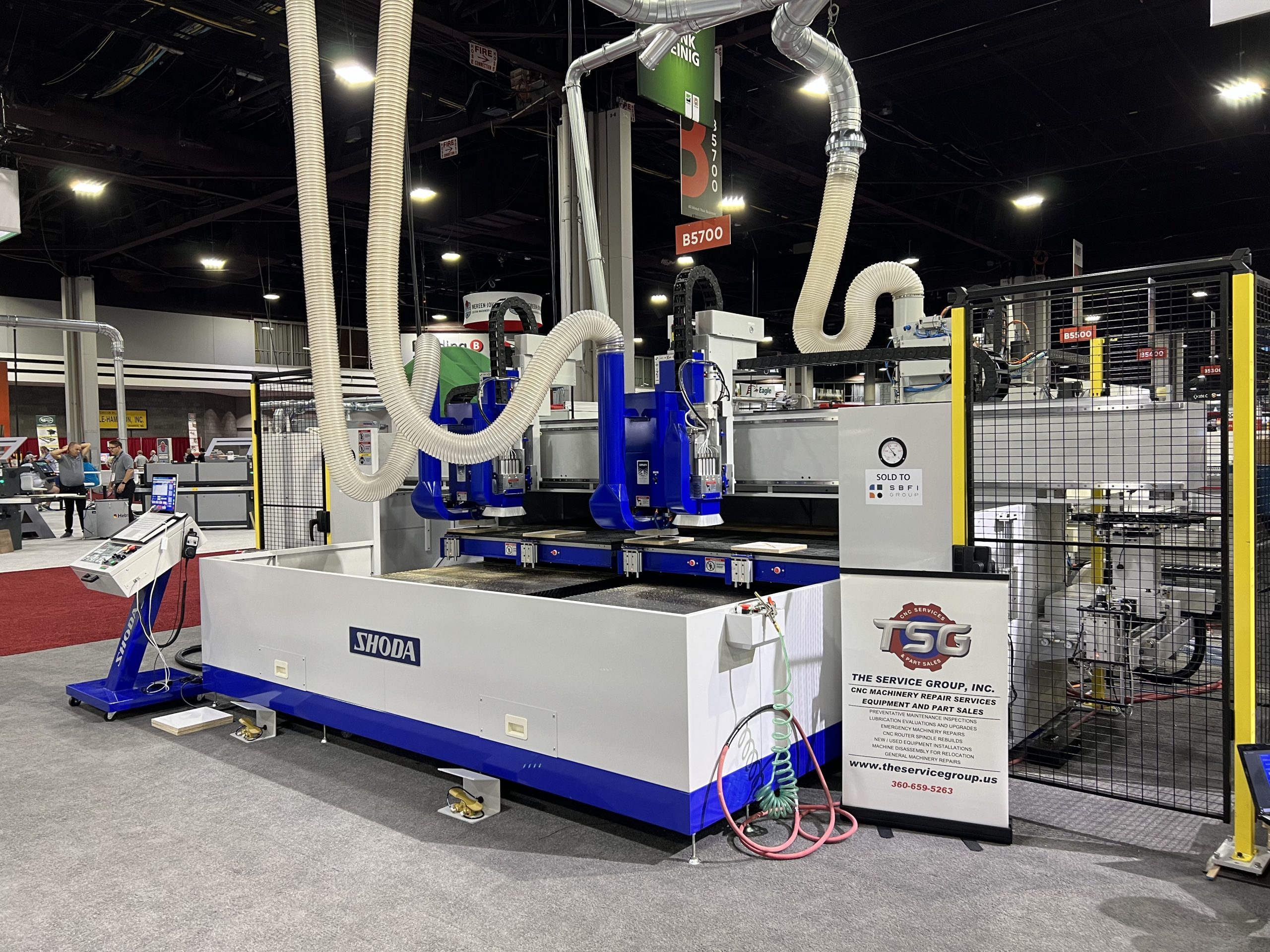
A Pioneer in Japanese CNC Router Technology
SHODA has been in business since 1926 and was the first company in Japan to develop an NC router. With a long history of precision machining, the company’s CNC routers are used to process a variety of materials—such as plastics, resins, and lightweight metals—with proven accuracy and reliability.
In 2014, SHODA developed a new type of NC router that doesn’t produce cutting dust. In many manufacturing environments, dust from machining can pose serious health risks if inhaled over long periods. SHODA’s solution to this issue has gained attention worldwide and is now used across the U.S., Europe, and Asia.