
Acrylonitrile Butadiene Styrene (ABS)
What Is ABS Material?
Acrylonitrile Butadiene Styrene (ABS) is an opaque thermoplastic polymer composed of three distinct monomers: acrylonitrile, butadiene, and styrene. Each component imparts specific mechanical properties to the final formulation:
- Acrylonitrile: Provides chemical resistance, fatigue resistance, and hardness.
- Butadiene: An elastomeric component that contributes toughness and impact strength, particularly at low temperatures.
- Styrene: Delivers rigidity, processability, and a glossy surface finish.
ABS manufacturing typically utilizes emulsion polymerization. This process combines immiscible materials into a single, cohesive product—conceptually similar to how milk stabilizes fat, oil, and water in a homogenous mixture. During polymerization, the acrylonitrile develops a polar attraction with the butadiene and styrene, resulting in a highly durable, cohesive thermoplastic.
Manufacturers can adjust the monomer ratios to engineer variations in the final product's characteristics. This flexibility allows for the tailoring of ABS specifications to meet precise application and performance requirements. While emulsion polymerization remains the industry standard, alternative methods such as continuous mass polymerization are also utilized.
Key Properties and Characteristics
Advantages of ABS
ABS offers a comprehensive balance of properties that drives its widespread adoption in industrial manufacturing:
Impact Resistance and Structural Durability
ABS exhibits exceptional impact strength and shock absorption. It is widely specified for robust, lightweight components requiring high fracture resistance under physical stress.
Chemical and Environmental Resistance
The polymer's chemical composition provides substantial resistance to a wide range of chemical agents and corrosive substances. This resistance is critical for extending service life and reducing maintenance in harsh operating environments.
Temperature Performance
ABS maintains structural integrity across a broad thermal range. The material can withstand multiple heating and cooling cycles without significant degradation, a characteristic that supports material recovery and recycling.
Electrical Insulation
With low electrical conductivity, ABS serves as an effective insulator. It is frequently selected for electronic enclosures, computer peripherals, and electrical housing applications where dielectric protection is required.
Machinability and Aesthetics
ABS is noted for its excellent machinability, allowing for precise shaping and finishing. The material is amenable to painting, gluing, and plating, facilitating customized surface treatments. Furthermore, ABS can be easily colored to meet exact project specifications (color matching).
Cost-Effectiveness
Relative to other engineering thermoplastics, ABS combines low production costs with high processability. This makes it an economically efficient choice for high-volume manufacturing without compromising essential structural requirements.
Limitations and Disadvantages
Despite its versatility, ABS has physical limitations that restrict its use in specific environments:
Weatherability Constraints
ABS has poor UV resistance. Prolonged exposure to sunlight or UV radiation can cause surface degradation, embrittlement, and color fading. Outdoor applications typically require protective coatings or UV stabilizers.
Solvent Resistance
While resistant to many chemicals, ABS is vulnerable to certain solvents (e.g., ketones, esters), which can cause stress cracking, swelling, or dissolution. Material compatibility must be verified before use in contact with aggressive solvents.
Thermal Limitations
ABS has a relatively low heat deflection temperature (HDT) compared to high-performance engineering plastics. It is generally unsuitable for applications requiring extreme heat resistance. Additionally, standard ABS is rarely used for medical implants due to biocompatibility constraints and the inability to withstand high-temperature sterilization (autoclaving).
Combustibility
ABS is flammable and generates high volumes of smoke upon combustion. This restricts its application in environments with stringent fire safety and smoke toxicity regulations unless flame-retardant grades are specified.
Food Industry Restrictions
Standard ABS grades generally lack regulatory approval for direct food contact, limiting their utility in the food processing and packaging sectors.
Material Cost Considerations
While cost-effective compared to high-performance polymers, ABS is typically more expensive than commodity plastics like polystyrene (PS) or polyethylene (PE). This price difference may be a deciding factor for strictly cost-sensitive applications.
Common Applications and Uses
Automotive Industry Applications
The automotive sector represents one of the primary markets for ABS. Manufacturers extensively utilize the material for dashboard components, seat backs, seat belt assemblies, door liners, pillar trim, and instrument panels. ABS serves as an effective lightweight alternative to metal, offering significant weight reduction while maintaining structural integrity. Modern vehicles typically incorporate multiple ABS components throughout both interior and exterior assemblies.
Electronics and Computer Components
ABS is prevalent in the electronics industry, widely used in computer keyboards, printer chassis, and electronic enclosures. The material's electrical insulation properties, combined with its machinability and aesthetic capabilities, make it the standard choice for housings, protective covers, and user interfaces. It remains a foundational material for countless electronic devices manufactured globally.
Pipes, Fittings, and Construction
ABS piping is a standard material for residential and commercial plumbing, specifically for drain, waste, and vent (DWV) systems. The material is highly resistant to peeling, rotting, corrosion, and leakage. Unlike many other plastics, ABS maintains high impact strength in extreme cold, making it ideal for underground installations and low-temperature environments. In construction, ABS is also utilized for tubing and corrugated structures that can be customized to meet specific dimensional requirements.
Musical Instruments and Consumer Products
ABS serves as the primary material for numerous consumer goods and musical instruments, including recorders, clarinets, and percussion housing. Its durability, acoustic properties, and cost-effectiveness make it suitable for both professional and student-grade instruments. Beyond music, ABS is extensively used in gardening tools, small appliances, protective headgear, and vacuum cleaner housings.
3D Printing and Prototyping
ABS is a dominant material in 3D printing and rapid prototyping. It offers heat resistance superior to Polylactic Acid (PLA), along with excellent strength and machinability. ABS is particularly valued for functional prototypes because it can be easily sanded, glued, or electroplated, providing designers with extensive post-processing flexibility for product development.
ABS vs. Other Plastic Materials
ABS vs. Polystyrene (PS)
Standard polystyrene lacks the toughness and impact resistance inherent in ABS. The incorporation of polybutadiene rubber during ABS manufacturing creates a material with significantly higher fatigue resistance. ABS achieves superior gloss, hardness, and durability compared to pure polystyrene, justifying its specification despite slightly higher production costs.
ABS vs. Polyethylene (PE)
While Polyethylene offers greater flexibility and superior resistance to certain chemicals, it lacks the rigidity and hardness of ABS. The primary advantage of ABS over PE lies in its dimensional stability and precision during injection molding. Additionally, ABS readily accepts paints and adhesives, making it the superior choice for manufacturing applications requiring strict tolerances and secondary finishing.
Recyclability and Environmental Impact
Is ABS Recyclable?
ABS plastic is fully recyclable and is assigned the recycling code #7 (Other). However, because this category encompasses various mixed plastics, most municipal curbside programs do not routinely process ABS (typically limiting collection to #1 PET and #2 HDPE). Consequently, post-consumer ABS products often do not enter standard municipal recycling streams.
Despite this, ABS is highly suitable for industrial recovery. Manufacturers can efficiently crush, liquefy, and remold the material multiple times without significant loss of mechanical properties. This capability supports the production of high-quality, cost-effective components from recycled stock.
Sustainability Considerations
The capacity to recycle ABS through multiple heat histories represents a significant environmental advantage. Many industrial facilities utilize closed-loop recycling systems to maximize material efficiency. By combining 100% recyclability with high durability—which extends the useful life of the end product—ABS contributes to reduced material waste over extended product lifecycles.
Conclusion
Acrylonitrile Butadiene Styrene (ABS) has established itself as a cornerstone material in modern industrial engineering. Through its balance of mechanical strength, processability, and affordability, it supports applications ranging from automotive manufacturing to consumer electronics.
To maximize the benefits of ABS, manufacturers should collaborate with experienced plastic processing specialists. Professional expertise ensures that material selection, mold design, and production parameters are optimized to meet the specific performance demands of the final application.
This media is sponsored by The SHODA Company
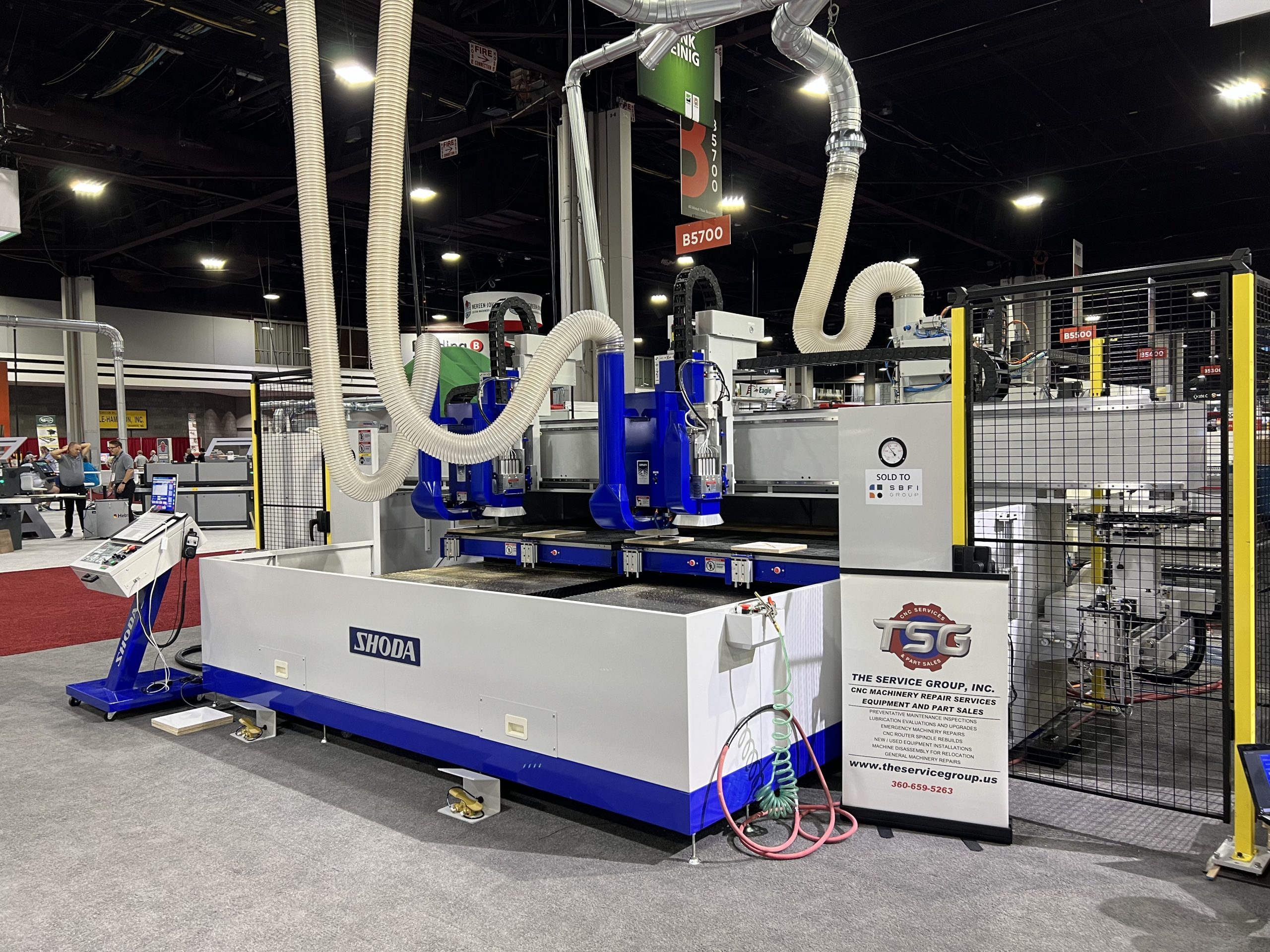
A Pioneer in Japanese CNC Router Technology
SHODA has been in business since 1926 and was the first company in Japan to develop an NC router. With a long history of precision machining, the company’s CNC routers are used to process a variety of materials—such as plastics, resins, and lightweight metals—with proven accuracy and reliability.
In 2014, SHODA developed a new type of NC router that doesn’t produce cutting dust. In many manufacturing environments, dust from machining can pose serious health risks if inhaled over long periods. SHODA’s solution to this issue has gained attention worldwide and is now used across the U.S., Europe, and Asia.