
CNC Router Guide » An Introduction to Japanese CNC Routers » Comparison of CNC Routers by Country: Japan vs. U.S., Germany, and China
Comparison of CNC Routers by Country: Japan vs. U.S., Germany, and China
Table of Contents
Japanese CNC routers are renowned for their exceptional precision and durability—performance characteristics that set them apart from machines manufactured in other countries. In this article, we compare the features of CNC routers by country of origin to help you evaluate and select the best solution for your specific needs. Key points for choosing the right CNC router are also explained in detail.
CNC Router Features by Country of Manufacture
Japanese CNC Routers
Japanese CNC routers are typically produced by manufacturers who specialize in the design and development of numerical control systems. This deep expertise in CNC technology enables Japanese machines to deliver outstanding machining capabilities and rigorous quality control.
They feature advanced functions such as CAD/CAM-integrated precision programming, 5-axis control, and automatic tool changers (ATC), making them ideal for applications that require intricate detail and fine machining.
Source: Nikkei Cross Tech (https://xtech.nikkei.com/atcl/nxt/column/18/00831/101600011/)
American CNC Routers
CNC routers made in the U.S. are known for their rugged designs and high productivity, tailored to the practical needs of factory operations. These machines are typically optimized for large-scale production and continuous use, excelling in both usability and durability.
Many American CNC routers are developed in-house by machine tool manufacturers for use with their own systems. As a result, they may offer lower specialization and compatibility compared to Japanese counterparts.
Source: Nikkei Cross Tech (https://xtech.nikkei.com/atcl/nxt/column/18/00831/101600011/)
German CNC Routers
Germany, known for its advanced engineering, produces CNC routers designed primarily to improve productivity. In addition to hardware development, some German manufacturers also specialize in grinding software, offering integrated systems capable of handling a wide range of production needs within a single platform.
Many German-made routers feature digital integration and advanced automation functions suitable for modern smart factory environments.
Chinese CNC Routers
With a large labor force and lower production costs, China has rapidly expanded its CNC router market. Chinese-made routers are characterized by their ability to deliver basic performance and functionality at highly competitive prices. These machines are most commonly adopted in small to medium-scale production lines with limited budgets.
However, compared to Japanese models, they tend to offer lower precision and durability. It is important to choose a machine based on your specific use case, intended applications, and budget constraints.
Key Factors When Choosing a CNC Router
Different CNC routers vary in terms of compatible materials, size capacity, and machining precision. Start by identifying the material, dimensions, and level of accuracy your application requires. Then select a machine that meets those criteria.
Price is also a major consideration. In addition to the base cost, make sure to evaluate total ownership costs—including options, extended warranties, support services, maintenance, replacement parts, and inspection fees—before making a decision.
Summary: CNC Router Characteristics by Country
This article has outlined how CNC routers can differ significantly depending on their country of origin—each reflecting unique design philosophies, technologies, performance levels, and pricing models.
Among these global offerings, Japanese CNC routers stand out for their advanced control systems and superior precision. If your production requires highly accurate machining of small or complex parts—with minimal margin for error—Japanese CNC routers are a top-tier solution worth considering.
This media is sponsored by The SHODA Company
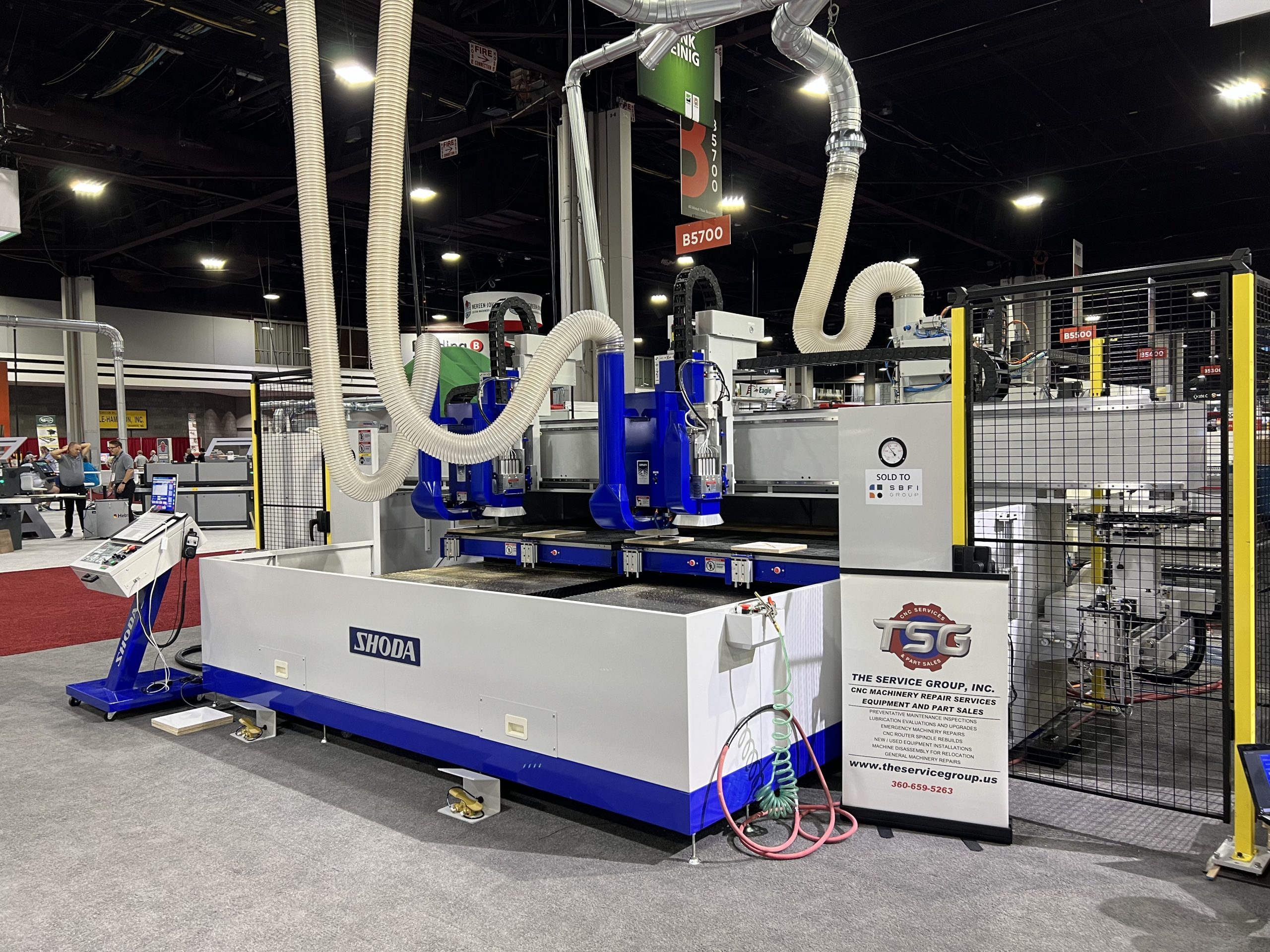
A Pioneer in Japanese CNC Router Technology
SHODA has been in business since 1926 and was the first company in Japan to develop an NC router. With a long history of precision machining, the company’s CNC routers are used to process a variety of materials—such as plastics, resins, and lightweight metals—with proven accuracy and reliability.
In 2014, SHODA developed a new type of NC router that doesn’t produce cutting dust. In many manufacturing environments, dust from machining can pose serious health risks if inhaled over long periods. SHODA’s solution to this issue has gained attention worldwide and is now used across the U.S., Europe, and Asia.