
CNC Router Guide » Applications of Japanese CNC Routers » High-Density Polyethylene (HDPE) for CNC Routing
High-Density Polyethylene (HDPE) for CNC Routing
What Is High-Density Polyethylene (HDPE)?
High-density polyethylene (HDPE) is a durable thermoplastic known for its high strength-to-weight ratio, strong impact resistance, and resistance to many chemicals and moisture. Its dense, linear molecular structure makes it a reliable material for industrial, commercial, and consumer products that need toughness without added weight.
HDPE is commonly used for pipes, tanks, containers, and fabricated plastic components. For industrial buyers comparing materials for CNC-routed parts, HDPE is often a practical choice when the application requires lightweight performance, moisture resistance, chemical resistance, and cost-effective fabrication.
In sheet and rod form, HDPE is especially well suited for routed and machined components used in wet, chemical, or outdoor environments.
Key Properties of HDPE for CNC Routing
High Strength-to-Weight Ratio
HDPE offers a practical balance of toughness and low weight, making it a good option for CNC-routed parts that need to be durable but still easy to handle, install, or move. This balance helps explain its use in packaging, industrial components, and fabricated plastic parts.
Low Moisture Absorption
HDPE has low moisture absorption, helping it maintain stable performance in humid, wet, washdown, or outdoor environments. This makes it a useful material for components exposed to water, frequent cleaning, or changing weather conditions.
Curbell lists HDPE’s water absorption at 0.10% after 24 hours of immersion and identifies low moisture absorption as one of the material’s key performance characteristics.
Chemical and Corrosion Resistance
HDPE is valued for its chemical resistance and corrosion resistance, making it a strong candidate for tanks, liners, material-handling equipment, and parts exposed to chemicals, moisture, or harsh cleaning conditions.
These properties are one reason HDPE is widely used in industrial, utility, and infrastructure-related applications.
Impact Resistance and Durability
HDPE is also known for its toughness, durability, and impact resistance. These characteristics help CNC-routed HDPE parts perform reliably in demanding environments where components may be bumped, loaded, cleaned frequently, or exposed to regular wear.
Dow highlights impact strength and durability as important attributes of HDPE in durable-goods and pipe applications.
Why HDPE Is a Good Material for CNC Routing
HDPE is often specified for CNC-routed and machined parts because it is easy to fabricate, widely available in sheet stock, and suitable for a broad range of industrial applications. Curbell notes that HDPE can be fabricated with standard machining methods and common woodworking tools, which makes it a good fit for CNC routing workflows involving flat or lightly formed plastic components.
For many buyers, HDPE’s appeal comes from its balance of machinability, environmental resistance, and cost. It can be a practical choice for routed parts used in moisture-prone, chemical-exposed, or outdoor environments, especially when the application needs a lighter-weight alternative to metal.
HDPE is especially well suited for parts that can be cut efficiently from sheet stock and used in environments where moisture resistance, chemical resistance, and durability matter as much as raw strength. For companies comparing plastics for CNC routing, HDPE is often evaluated as a durable, lightweight, and fabrication-friendly material.
Common CNC-Routed HDPE Applications
HDPE is used in a wide range of fabricated products, including chemical tanks, cutting boards, water-related components, outdoor systems, marine-adjacent products, and industrial linings. In CNC-routed production, these applications often translate into panels, guards, covers, liners, machine-side components, and other custom flat or profiled parts cut from sheet stock.
In environments where moisture, chemicals, or repeated cleaning are part of normal operation, HDPE can provide a practical combination of durability and low maintenance. UV-stabilized and application-specific grades can also extend its usefulness for outdoor cabinetry, signage, marine-adjacent applications, and other demanding installations.
Advantages of HDPE for Industrial Buyers
One of HDPE’s main advantages is its versatility. It combines low weight, chemical resistance, and ease of fabrication in a material that is widely available in multiple grades and forms. This makes it easier for industrial teams to match the material to application needs such as food-contact surfaces, outdoor exposure, marine-adjacent use, or general fabrication.
HDPE can also support cost-conscious material decisions when a project does not require the higher performance of more specialized engineering plastics. For many fabricated parts, it provides enough toughness, moisture resistance, and chemical resistance to meet real-world requirements while remaining practical to source and machine.
Limitations of HDPE in CNC Applications
HDPE is not the right fit for every routed or machined project. Curbell lists several limitations, including difficulty with adhesive bonding, poor printability and paintability, limited performance at elevated temperatures, and relatively poor dimensional stability. These factors are important when a project requires tight tolerances, secondary finishing, printed graphics, painted surfaces, or strong adhesive assembly.
Material selection should also account for the operating environment. While HDPE performs well in many wet and chemical-exposure settings, outdoor applications may require UV-stabilized grades, and high-temperature environments may call for a different material altogether.
HDPE vs. Other Plastics for CNC Routing
Compared with LDPE, HDPE offers higher strength and stiffness, which is why it is often preferred for more demanding fabricated applications. This makes HDPE a better fit for many CNC-routed parts that need to hold their shape and perform reliably over time.
For buyers comparing plastics for CNC routing, HDPE is often a strong option when chemical resistance, moisture resistance, low weight, and cost efficiency are the top priorities. However, if a project requires easier adhesive bonding, better paintability, or greater dimensional stability, another plastic may be a better fit depending on the part design, tolerance requirements, and service environment.
How to Choose the Right HDPE Material for Your Project
When selecting HDPE for CNC routing, start with the part geometry, required thickness, and end-use environment. Flat panels, guards, liners, covers, and other sheet-based components are often good candidates for CNC-routed HDPE.
It is also important to determine whether the part will be exposed to chemicals, outdoor weather, washdown conditions, or food-contact requirements. These factors can affect both grade selection and long-term performance.
Grade selection matters. Depending on the application, buyers may need FDA-compliant HDPE, UV-stabilized HDPE, marine-grade HDPE sheet, or another formulation designed for the operating environment. Matching the grade to the actual service conditions helps reduce the risk of material mismatch and supports more reliable long-term performance.
This media is sponsored by The SHODA Company
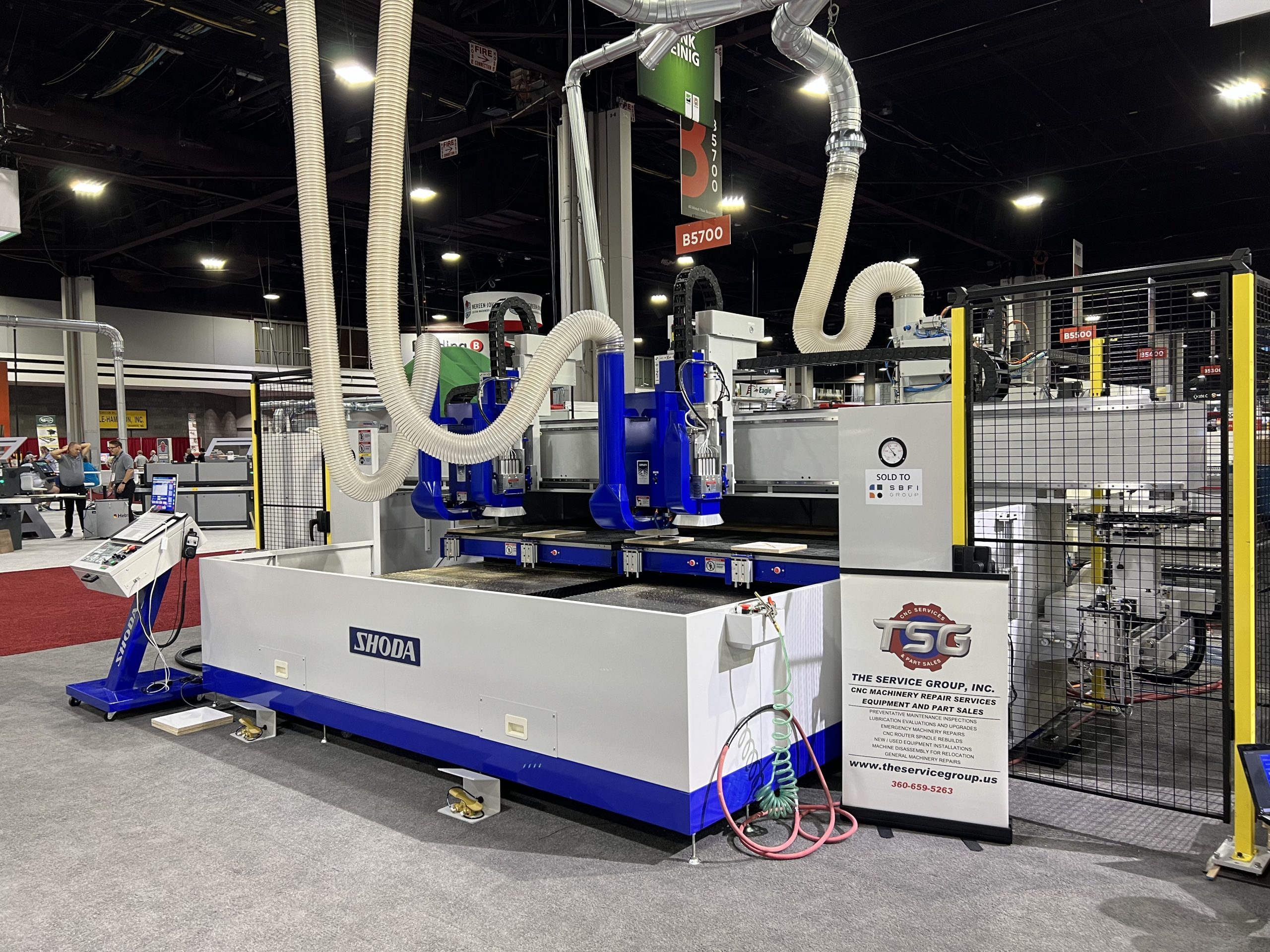
A Pioneer in Japanese CNC Router Technology
SHODA has been in business since 1926 and was the first company in Japan to develop an NC router. With a long history of precision machining, the company’s CNC routers are used to process a variety of materials—such as plastics, resins, and lightweight metals—with proven accuracy and reliability.
In 2014, SHODA developed a new type of NC router that doesn’t produce cutting dust. In many manufacturing environments, dust from machining can pose serious health risks if inhaled over long periods. SHODA’s solution to this issue has gained attention worldwide and is now used across the U.S., Europe, and Asia.