
CNC Router Guide » Applications of Japanese CNC Routers » Polyether Ether Ketone: Properties, Applications, and Material Selection Guide
Polyether Ether Ketone: Properties, Applications, and Material Selection Guide
Polyether ether ketone, commonly known as PEEK, is a high-performance thermoplastic used in applications where standard engineering plastics may not provide enough heat resistance, mechanical strength, chemical resistance, or dimensional stability. As a semicrystalline polymer in the polyaryletherketone, or PAEK, family, PEEK is often specified for demanding parts used in aerospace, automotive, medical, electronics, semiconductor, chemical processing, and precision industrial applications.
For engineers, product designers, and procurement teams in the U.S., PEEK is rarely chosen because it is the lowest-cost material. It is selected when an application requires reliable performance under high temperatures, repeated loads, harsh operating conditions, or strict performance requirements. Before moving into production, however, teams need to confirm the appropriate grade, processing method, regulatory requirements, and total project cost.
Key Takeaways
- Polyether ether ketone, or PEEK, is a high-performance thermoplastic valued for heat resistance, mechanical strength, chemical resistance, and dimensional stability.
- PEEK is commonly considered for demanding applications, including aerospace parts, automotive components, medical devices, electronics, semiconductor equipment, and chemical processing components.
- The right PEEK material depends on the operating environment, including temperature, load, wear, chemical exposure, tolerance requirements, production volume, and regulatory needs.
- PEEK is generally more expensive and more challenging to process than many common plastics, making it best suited for applications where performance requirements justify the cost.
What Is Polyether Ether Ketone?
Polyether ether ketone is a high-performance engineering polymer more commonly known by its abbreviation, PEEK. It belongs to the polyaryletherketone, or PAEK, family of polymers and is known for combining thermal stability, mechanical strength, chemical resistance, and processability in a single thermoplastic material.
Unlike commodity plastics, which are often selected for cost efficiency or general-purpose molding, PEEK is typically used for components that must continue performing in difficult operating environments. These environments may involve high temperatures, repeated mechanical stress, chemical exposure, tight dimensional tolerances, or situations where weight reduction is important but metal is not the ideal choice.
Because PEEK is a thermoplastic, it can be molded, extruded, machined, or additively manufactured, depending on the grade and project requirements. This makes it useful not only as a raw material but also as a practical option for precision components, prototypes, and production parts.
`Key Properties of PEEK
High Temperature Resistance
One of the main reasons engineers consider PEEK is its ability to maintain useful performance at elevated temperatures. PEEK has a high melting point compared with many other thermoplastics and is often used in applications where heat exposure could cause standard engineering plastics to soften, deform, or lose mechanical performance.
This thermal performance makes PEEK a suitable option for parts used near engines, in industrial equipment, in electrical and electronic assemblies, and in other environments where long-term heat resistance is a key design requirement. Actual service temperature limits depend on the selected grade, part design, load conditions, and exposure environment.
Mechanical Strength and Dimensional Stability
PEEK offers a strong balance of stiffness, strength, toughness, and dimensional stability. These properties are especially important for bearings, seals, bushings, valve components, manifolds, insulators, and precision-machined parts that must maintain their shape and function during use.
Filled grades, such as glass-filled or carbon-fiber-filled PEEK, can further improve stiffness, dimensional control, wear performance, or load-bearing capability. However, fillers can also affect machinability, surface finish, electrical properties, and processing behavior, so grade selection should be based on the application’s actual operating conditions.
Chemical Resistance
PEEK is valued for its resistance to many organic and aqueous chemical environments. This is one reason it is used in chemical processing equipment, fluid handling components, analytical instruments, and high-performance industrial parts.
However, chemical resistance should not be treated as universal. Strong acids, halogens, certain halogenated compounds, and some high-temperature chemical environments may require special review. When chemical exposure is central to the application, compatibility should be confirmed using supplier guidance, material test data, and real operating conditions.
Low Moisture Absorption and Electrical Performance
PEEK has low moisture absorption compared with many other engineering plastics, which helps support dimensional stability in humid or variable environments. This property can be important for precision parts, electrical components, and applications where changes in size or mechanical performance could affect reliability.
PEEK is also used in applications that require electrical insulation, thermal insulation, or stable performance in demanding electronic and industrial environments. As with other properties, final performance depends on the specific grade, filler package, geometry, and processing history.
Common Applications of Polyether Ether Ketone
Aerospace and Automotive Components
PEEK is often considered for aerospace and automotive applications where high temperature resistance, weight reduction, wear performance, and long-term reliability are important. It may be used as a metal alternative in selected components, especially when reducing weight or preventing corrosion is a design priority.
Typical applications include bushings, bearings, seals, fasteners, electrical insulation parts, and other components exposed to heat, friction, or mechanical loads. For aerospace and transportation applications, material traceability, grade certification, and application-specific testing are especially important.
Medical and Dental Applications
PEEK is also used in medical and dental applications, including selected implantable and non-implantable components. Its strength, radiolucency, and compatibility with precision manufacturing make it relevant for spinal devices, orthopedic components, dental parts, and surgical instruments.
Medical use requires additional caution. A material described as “PEEK” is not automatically suitable for a regulated medical application. Medical-grade material documentation, biocompatibility data, sterilization compatibility, the regulatory pathway, and supplier support should all be confirmed before design approval.
Semiconductor, Electronics, and Electrical Components
In semiconductor and electronics applications, PEEK is used where dimensional stability, cleanliness, low moisture uptake, electrical insulation, and resistance to heat or chemicals are required. Common components include test sockets, wafer handling parts, insulators, connectors, and precision fixtures.
For these applications, the PEEK grade can matter as much as the base polymer itself. Engineers may need to evaluate outgassing, contamination risk, electrostatic behavior, tolerance requirements, and compatibility with cleaning agents or process chemicals.
Chemical Processing and Industrial Equipment
PEEK is widely used for industrial parts that must operate in harsh mechanical or chemical environments. Examples include seals, pump components, valve seats, compressor parts, manifolds, bearings, and analytical instrument components.
In these applications, PEEK can be attractive because it combines chemical resistance with mechanical performance. Final material selection should still account for temperature, pressure, fluid chemistry, wear conditions, and whether the part will be molded, extruded, or machined.
PEEK Grades and Material Options
Unfilled PEEK
Unfilled PEEK is often chosen when an application requires a balanced combination of toughness, chemical resistance, electrical insulation, purity, and machinability. It may be suitable when fillers could create unwanted changes in electrical behavior, surface quality, or contamination risk.
Unfilled PEEK is frequently used as a baseline when evaluating whether PEEK is the right material for a project. If the application requires greater stiffness, lower thermal expansion, or improved wear performance, filled grades may be considered next.
Glass-Filled PEEK
Glass-filled PEEK is typically selected when improved stiffness, dimensional stability, or creep resistance is needed. Glass fiber reinforcement can help parts maintain their shape under load or heat, making it useful for structural components, housings, and precision industrial parts.
However, glass reinforcement can affect toughness, machining behavior, and surface finish. It can also make the material more abrasive during processing or machining, so tooling and manufacturing conditions should be reviewed in advance.
Carbon-Fiber-Filled PEEK
Carbon-fiber-filled PEEK can provide higher stiffness, improved wear performance, and lower thermal expansion compared with unfilled grades. It may be a strong candidate for high-load, wear-prone, or weight-sensitive applications where standard PEEK does not provide sufficient mechanical performance.
Because carbon fiber can influence electrical and thermal behavior, this grade should be evaluated carefully when electrical insulation, conductivity, or static performance is important. It may work well in one design and be unsuitable for another, depending on the operating environment.
Medical-Grade and Specialty PEEK
Specialty PEEK grades are available for applications that require additional documentation, purity control, regulatory support, or specific performance characteristics. Medical, food-contact, aerospace, semiconductor, and other regulated or high-specification applications should not rely on generic material descriptions alone.
When a project has compliance requirements, the material grade should be selected based on supplier data sheets, certifications, test reports, and any applicable U.S. or international standards. Identifying these requirements early can help reduce the risk of redesign, requalification, or sourcing problems later.
How PEEK Is Processed
Injection Molding
Injection molding is often used when PEEK parts need to be produced in repeatable quantities. Because PEEK has a high melting point and requires careful temperature control, the process typically requires suitable equipment, tooling, drying, and molding expertise.
For molded PEEK components, final performance can be affected by crystallinity, cooling conditions, wall thickness, gate design, and post-processing. These factors should be considered during part design, not treated only as manufacturing details at the end of development.
Extrusion
PEEK can be extruded into stock shapes such as rods, sheets, tubes, and films, which can then be machined into finished components. Extruded PEEK stock is often used for precision-machined parts, prototypes, low-volume components, or parts with geometries that are not practical for injection molding.
Extrusion quality, internal stress, dimensional consistency, and grade selection can all influence machining performance and final part reliability. For tight-tolerance components, material sourcing and machining strategy should be reviewed together.
CNC Machining
CNC machining is a common method for producing high-quality PEEK parts, especially when the design requires tight tolerances, small production runs, complex geometries, or fast iteration. Machined PEEK parts are used in industrial, medical, semiconductor, and aerospace-related applications.
Machining PEEK requires careful attention to stress management, tool selection, fixturing, heat generation, and dimensional inspection. Filled PEEK grades may require additional care because reinforcement can change cutting behavior, surface finish, and tool wear.
Additive Manufacturing and 3D Printing
PEEK can also be processed through additive manufacturing methods such as FFF or FDM, although it is more demanding than many common 3D printing materials. High-temperature printers, controlled build environments, and careful thermal management are typically needed to produce reliable PEEK parts.
3D printing may be useful for prototypes, complex geometries, or specialized low-volume components, but printed PEEK should not be assumed to match molded or machined PEEK automatically. Mechanical properties, porosity, crystallinity, and qualification requirements should be evaluated for the intended application.
Advantages and Limitations of PEEK
Advantages
PEEK’s main advantage is that it combines several high-performance properties in a single thermoplastic material. It can provide heat resistance, mechanical strength, chemical resistance, wear performance, low moisture absorption, and dimensional stability at a level many common plastics cannot match.
PEEK can also support metal replacement strategies in selected applications. When properly specified, it may help reduce weight, improve corrosion resistance, simplify part design, or maintain performance in environments where metals or lower-cost plastics are less suitable.
Limitations
The main limitation of PEEK is cost. It is significantly more expensive than many standard engineering plastics, so it is typically selected only when the performance requirements justify the material and processing costs.
PEEK can also be more difficult to process than lower-temperature plastics. Injection molding, extrusion, machining, and 3D printing each require the right equipment, process control, and experience. In addition, selecting the wrong grade can lead to problems with stiffness, wear, chemical compatibility, electrical behavior, regulatory approval, or long-term reliability.
For this reason, PEEK should not be specified simply because it is considered a premium material. It should be selected when the application conditions clearly require its performance profile.
PEEK vs. Other High-Performance Plastics
PEEK is often compared with other high-performance plastics such as PTFE, PEI, PPS, PI, and advanced fluoropolymers. The best choice depends less on which material is “better” overall and more on which material fits the application environment.
Compared with PTFE, PEEK generally offers higher mechanical strength and dimensional stability, while PTFE may be preferred when very low friction or broad chemical inertness is the main requirement. Compared with PEI, PEEK is often selected for higher chemical resistance and stronger performance in certain high-temperature or wear applications, while PEI may be attractive when amorphous transparency, dimensional stability, or cost balance is important.
Compared with PPS, PEEK may offer a higher performance ceiling in demanding mechanical and thermal environments, although PPS can be more cost-effective for some chemically resistant applications. Compared with metals, PEEK may help reduce weight and avoid corrosion, but metals may remain the better option for extreme stiffness, thermal conductivity, or cost-sensitive structural designs.
Material comparison should account for temperature, load, wear, chemical exposure, regulatory requirements, part geometry, processing method, production volume, and total cost. Comparing materials based on a single property can lead to the wrong material choice.
How to Choose the Right PEEK Material for Your Application
Selecting the right PEEK material starts with defining the operating environment. Engineers should identify the maximum and continuous service temperatures, mechanical loads, wear or friction conditions, chemical exposure, moisture exposure, electrical requirements, and expected service life.
The next step is to match those requirements with the appropriate grade and manufacturing method. Unfilled PEEK may be appropriate when balanced performance and electrical insulation are priorities. Glass-filled PEEK may be useful when stiffness and dimensional stability are more important. Carbon-fiber-filled PEEK may be suitable for high-load or wear-related applications. Medical-grade, semiconductor-grade, or other specialty materials may be required when documentation and compliance are central to the project.
Production volume also affects material and process selection. Injection molding may be appropriate for repeatable, higher-volume parts, while machining from stock shapes may be better suited for prototypes, low-volume production, or tight-tolerance components. Additive manufacturing can be useful in selected cases, but printed PEEK must be evaluated carefully if the part will be used in a demanding or regulated environment.
Before finalizing a PEEK material, project teams should confirm the following:
- Required continuous and peak operating temperatures
- Mechanical load, impact, creep, and fatigue conditions
- Wear, friction, and lubrication requirements
- Chemical exposure and cleaning conditions
- Dimensional tolerance and inspection requirements
- Electrical, thermal, or static performance requirements
- Regulatory, medical, food-contact, aerospace, or semiconductor documentation needs
- Expected production volume and preferred manufacturing process
- Total material, tooling, machining, qualification, and lifecycle costs
When these conditions are clearly defined, PEEK can be evaluated as a practical engineering material rather than as a generic “high-performance plastic.”
Frequently Asked Questions About Polyether Ether Ketone
What is polyether ether ketone used for?
Polyether ether ketone is used for demanding components that require heat resistance, mechanical strength, chemical resistance, dimensional stability, or wear performance. Common application areas include aerospace, automotive, medical, electronics, semiconductor, chemical processing, and precision industrial parts.
Is polyether ether ketone the same as PEEK?
Yes. PEEK is the common abbreviation for polyether ether ketone. In technical documents, supplier data sheets, and engineering discussions, the abbreviation PEEK is used more often than the full chemical name.
Why is PEEK expensive?
PEEK is expensive because it is a high-performance polymer with demanding synthesis, processing, and quality requirements. It is typically used when application requirements are too demanding for lower-cost plastics.
Can PEEK replace metal?
PEEK can replace metal in selected applications, especially where weight reduction, corrosion resistance, electrical insulation, or chemical resistance is important. However, it is not a direct replacement for metal in every design. Load, stiffness, temperature, cost, and safety requirements must be reviewed before making the substitution.
Is PEEK suitable for medical devices?
PEEK can be used in certain medical and dental applications, including selected implantable and non-implantable components. However, medical use requires the correct grade, documentation, biocompatibility data, sterilization review, and regulatory assessment.
Can PEEK be injection molded?
Yes. PEEK can be injection molded, but it requires high-temperature processing equipment, appropriate tooling, controlled drying, and experienced process management. The molding process can affect crystallinity and final part properties.
What temperature can PEEK withstand?
PEEK has a high melting point and is known for retaining useful properties at elevated temperatures. The actual usable temperature range depends on the grade, load, exposure time, chemical environment, and part design.
Is PEEK chemically resistant?
PEEK is resistant to many organic and aqueous environments, making it useful in chemical processing and fluid handling applications. However, it can be affected by certain strong acids, halogens, and high-temperature chemical conditions, so chemical compatibility should be confirmed for each application.
Summary: When PEEK Is Worth Considering
Polyether ether ketone is worth considering when an application requires more than ordinary plastic performance. It is especially relevant when heat resistance, mechanical strength, chemical resistance, wear performance, dimensional stability, or long-term reliability are central to the design.
At the same time, PEEK is not the right material for every project. Its higher cost, more demanding processing requirements, and grade-specific performance differences mean it should be selected carefully. The strongest PEEK applications are those where the operating conditions are clearly defined and the performance benefits justify the material, processing, and qualification costs.
For engineering teams, the best approach is to start with the application requirements, compare PEEK against realistic alternatives, and then select the grade and manufacturing method that match the part’s actual operating environment.
This media is sponsored by The SHODA Company
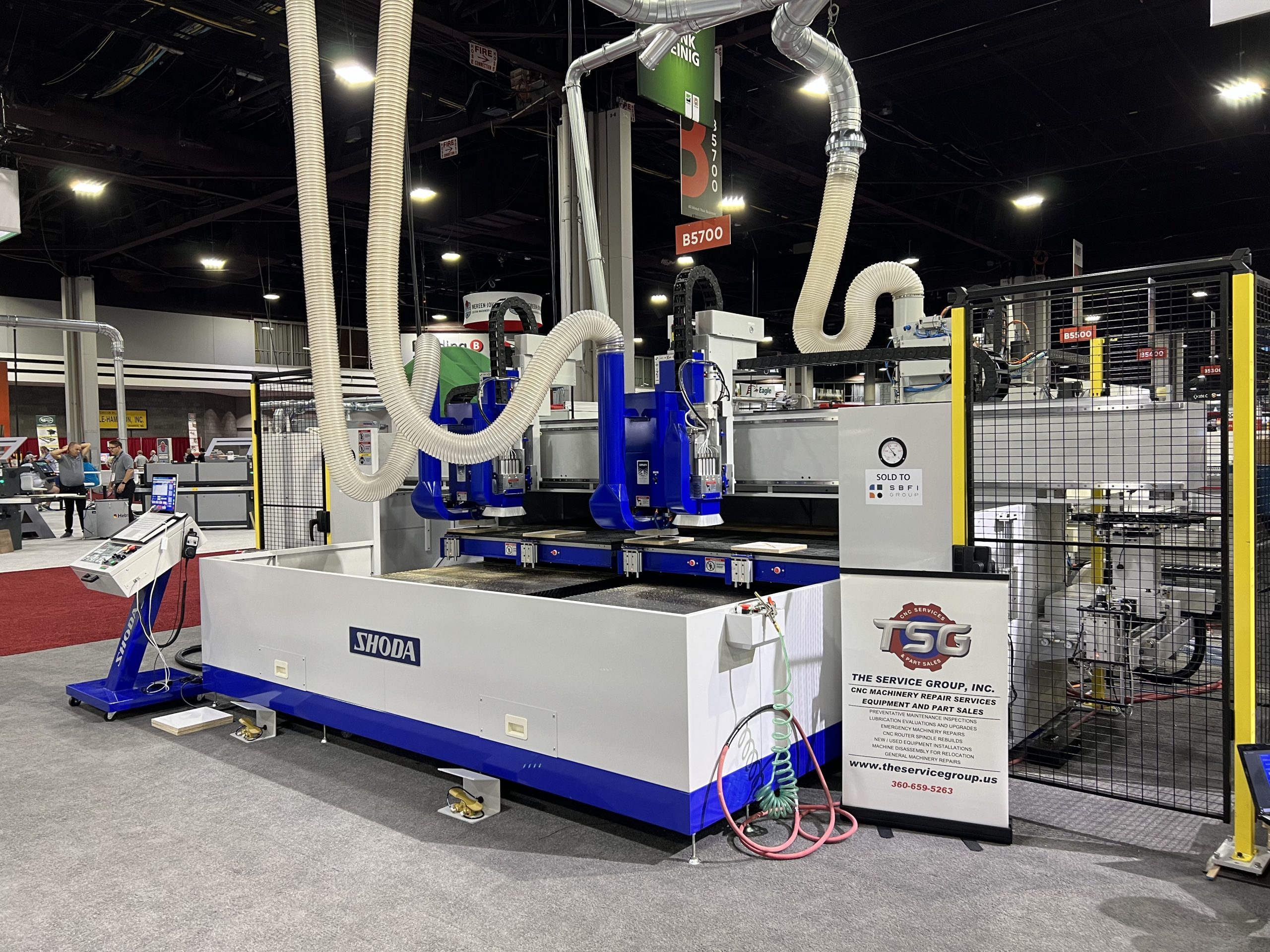
A Pioneer in Japanese CNC Router Technology
SHODA has been in business since 1926 and was the first company in Japan to develop an NC router. With a long history of precision machining, the company’s CNC routers are used to process a variety of materials—such as plastics, resins, and lightweight metals—with proven accuracy and reliability.
In 2014, SHODA developed a new type of NC router that doesn’t produce cutting dust. In many manufacturing environments, dust from machining can pose serious health risks if inhaled over long periods. SHODA’s solution to this issue has gained attention worldwide and is now used across the U.S., Europe, and Asia.