
CNC Routers for Woodworking
Table of Contents
This article offers a comprehensive look at the benefits of using Japanese-made CNC routers for wood cutting applications, taking into account the unique characteristics of woodworking. We’ll also introduce real-world examples of wood cutting done with CNC routers, along with the types of wood that can be processed—great reference material for manufacturers considering CNC solutions.
Characteristics of Wood Cutting
Compared to metals or some plastics, wood is softer and easier to cut, making it suitable for detailed carving, curved shapes, and grooving. Its natural warmth and aesthetic appeal also make it a favored material in many design-focused applications.
However, working with wood requires attention to grain direction. Depending on the cutting direction, cracking or tearing may occur. Additionally, changes in moisture content can lead to warping or splitting during the cutting process.
Benefits of Using Japan-Made CNC Routers for Wood Cutting
Many Japanese CNC routers excel at precisely controlling cutting paths, speeds, and tool angles based on design data. This precision allows the machines to adapt to the characteristics of wood, delivering clean, accurate results.
With high-level programmatic control, Japanese-made CNC routers help minimize issues such as cracking and warping—common challenges in woodworking.
Case Studies: Wood Cutting with Japanese CNC Routers
Case Study: Cutting Paper-Laminated Boards with CNC Routers
Machine used: Not specified
Paper-laminated boards, which consist of a core material sandwiched between thin paper layers on both sides, often pose problems during cutting. Standard cutting methods frequently leave burrs on the paper surface, requiring time-consuming manual post-processing.
In this case, the issue was solved by using a specialized tool configuration. The tool featured an up-cut flute on the bottom and a down-cut flute on the top—also known as an “up/down spiral bit”—which pressed the paper layers tightly during cutting and reduced burr formation.
The machine operated at 15,000 RPM with a feed speed of 4 meters per minute, achieving both efficiency and high precision.
Source: SHODA
https://www.sessaku-c.com/result_detail.php?id=37
Case Study: Cutting Chair Legs from Maple Wood Using a CNC Router
Machine used: NC516
This case study showcases the production of piano-style chair legs carved from solid blocks of laminated maple, a hard and dense wood. The process successfully produced three leg components from a single wooden block, maximizing material efficiency.
The operation began with the use of a double-flute roughing bit to drill horizontal holes. This was followed by trimming the outer shape using a staggered straight bit, allowing for clean and precise edge shaping.
Source: SHODA
https://www.sessaku-c.com/result_detail.php?id=33
Case Study: Carving Electric Guitar Bodies with a CNC Router
Machine used: NC8
In this case, a solid wood block (400×500×50mm) was used to carve the body of an electric guitar. Leveraging the natural properties of solid wood, the router achieved efficient cutting of the guitar's complex shape.
To reduce cutting resistance and avoid vibration (commonly known as chatter), the team used a down-cutting method. The router operated at 18,000 RPM with a feed speed of 3,000 mm/min, optimizing for both speed and precision.
The outer shape was cut using a 24mm-diameter solid carbide router bit, and finer adjustments and finishing touches were performed using smaller 12mm and 6mm solid carbide bits as needed.
Source: SHODA
https://www.sessaku-c.com/result_detail.php?id=27
Router Bits Commonly Used for Wood Processing
CNC routers cut and carve wood using high-speed router bits. Some typical types include:
- Square End – for flat surfaces
- Ball Nose – for curves and contouring
- V-Cut Bit – for angled and V-shaped grooves
- Dish Bit – for rounded corners
- Drill Bit – for, well, drilling holes
Many other variations exist based on bit shape, size, and angle. Match your bit to the wood type, size, shape, and what you’re trying to do—preferably before pressing the “go” button.
Choosing the Right CNC Router for Wood Cutting
Vibration and flex can cause rough cuts and cracks along the grain. So when choosing a CNC router, focus on frame rigidity and structural integrity. Yes, even machines need good posture.
Also check for:
- Cutting precision
- Advanced control systems
- Ease of maintenance
- Dust collection functions (your lungs will thank you)
Cutting Techniques for Wood Using CNC Routers
Various techniques can be used depending on the wood's properties. Some popular ones:
- Downcutting – for smooth surfaces
- Upcutting – for fast chip removal
- Compression Cutting – blends upcut and downcut for clean finishes
- Pocketing – for carving recesses
- V-Carving – for decorative grooves
- 3D Contouring – for curved surfaces
These methods may be used with other materials too, but wood usually demands higher speed and rotation settings due to its softness and constant need for attention.
Conclusion: Why CNC Routers Are Game-Changers for Wood Cutting
Traditionally, wood cutting was a hands-on art done with saws, chisels, manual routers, and the unwavering patience of saints. Even when semi-automated machines entered the scene, they often lacked the precision needed for fine work.
Now, with CNC routers offering computer-controlled accuracy, wood cutting can finally be modernized without sacrificing quality. So if you're looking to boost efficiency while preserving that artisanal feel—this might be your cue to upgrade.
This media is sponsored by The SHODA Company
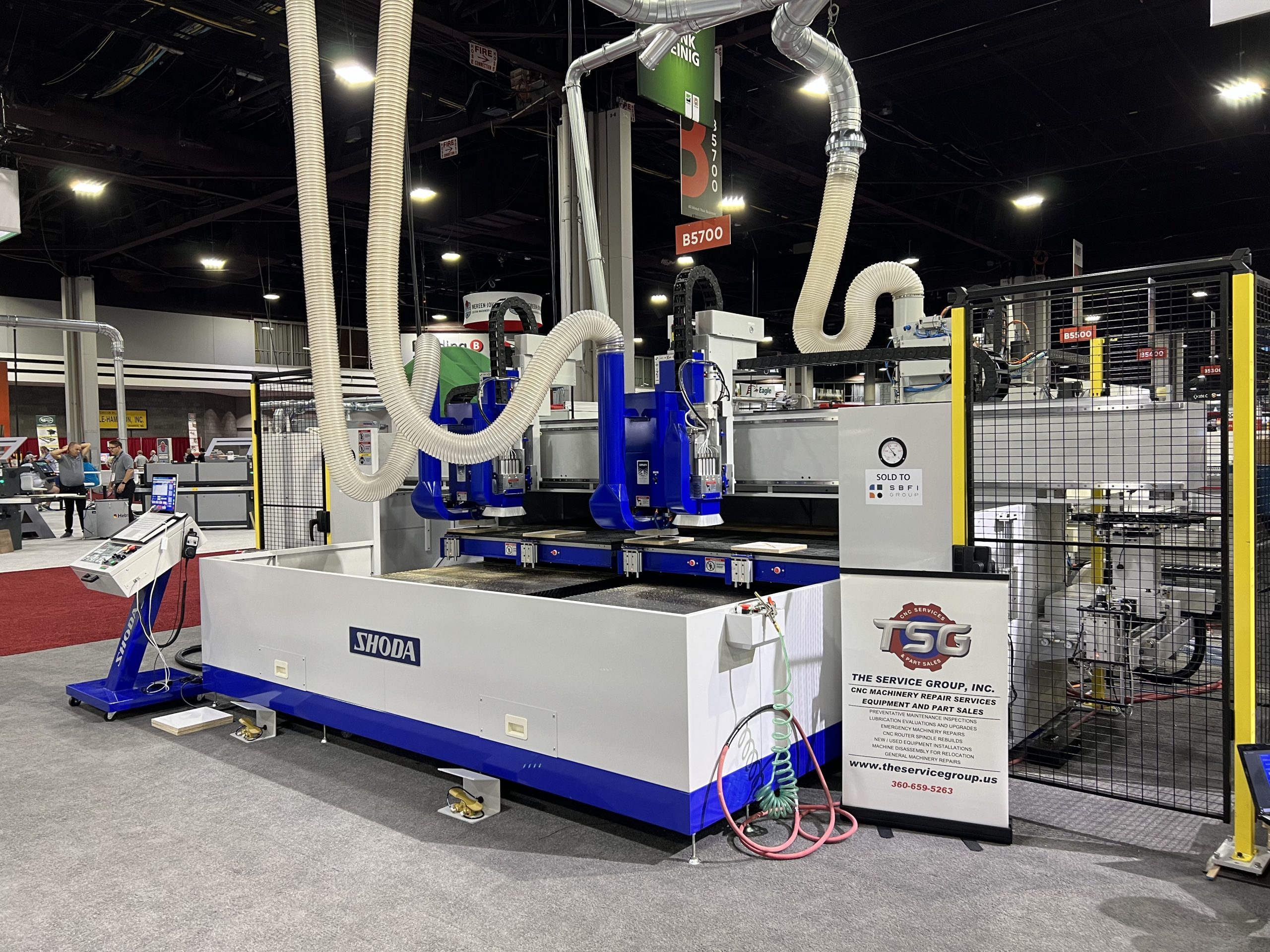
A Pioneer in Japanese CNC Router Technology
SHODA has been in business since 1926 and was the first company in Japan to develop an NC router. With a long history of precision machining, the company’s CNC routers are used to process a variety of materials—such as plastics, resins, and lightweight metals—with proven accuracy and reliability.
In 2014, SHODA developed a new type of NC router that doesn’t produce cutting dust. In many manufacturing environments, dust from machining can pose serious health risks if inhaled over long periods. SHODA’s solution to this issue has gained attention worldwide and is now used across the U.S., Europe, and Asia.