
CNC Routers for Polyvinyl Chloride (PVC)
As demand for PVC machining accelerates, choosing the right CNC router is critical for efficiency, safety, and profitability. This article explains the key mechanical, thermal, and electrostatic properties of PVC, outlines essential CNC router features, and provides insights into the latest market data and buying trends for 2025–2030.
Key Material Properties of Polyvinyl Chloride (PVC)
Rigid (Type I) PVC is dense (ρ ≈ 1.38 g/cm³) and surprisingly strong for a thermoplastic, with tensile strength around 7,000 psi (48 MPa) and Shore-D hardness in the mid-70s. Its composition of 57% chlorine naturally provides fire retardancy—achieving a UL-94 V-0 rating without additives—as well as exceptional chemical resistance to acids, alkalis, and many solvents.
PVC softens at temperatures significantly below its melting point of approximately 360 °F (182 °C). Surface temperatures exceeding 175 °F (80 °C) can cause chips to smear and weld onto cutting tools. Additionally, since PVC is an electrical insulator, fine, micron-sized dust can easily build up static charges, sticking to guide rails and electronics unless properly grounded. Successful machining of PVC requires careful consideration of these mechanical, thermal, and electrostatic properties.
Machining Precautions When Cutting PVC
Heat control
Run a single-flute (O-flute) bit at 12,000–18,000 rpm and maintain high feed rates (200–400 ipm for ½-inch tools) to ensure each flute removes large, cool chips. Avoid liquid coolants; instead, use a directed air blast or a fine mist of food-grade oil to clear chips and keep surfaces clean.
Combustible dust & static
NFPA 664 classifies PVC dust similarly to wood dust, requiring cyclone dust collectors to be installed outdoors unless equipped with spark-suppression systems. Properly ground the spindle, gantry, and dust extraction hose spiral to prevent static build-up, which can disrupt servo motors and electronics.
Vinyl-chloride exposure
Excessive heat during machining can cause PVC to depolymerize, releasing hazardous vinyl-chloride monomer. OSHA limits exposure to 1 ppm over an 8-hour shift and 5 ppm during any 15-minute period. Negative-pressure enclosures and P100 respirators are strongly recommended, especially for extended production runs.
Choosing a CNC Router Purpose-Built for PVC
A CNC router optimized for PVC machining must effectively manage heat, vibration, and static electricity within a well-balanced design. Start by selecting a high-torque spindle capable of maintaining speeds between 10,000 and 18,000 rpm, with minimal run-out. This allows a single-flute cutter to remove large, cool chips before the material softens. These chips must be cleared immediately from the cutting area, making it essential to use an enclosed, anti-static dust shoe connected to a large-diameter hose. Additionally, a multi-zone vacuum table will securely hold and flatten bowed sheets without obstructive clamps.
The router’s frame should be constructed from stress-relieved (heat-treated) steel or cast iron, driven by precision helical racks or linear motors. This ensures stable and accurate cutting at high feed rates, preventing the polymer from overheating. Finally, select a control system providing real-time spindle load monitoring, enabling operators to adjust feed and speed settings dynamically. This helps ensure clean, melt-free edges and compliance with future dust-safety regulations without needing costly retrofits.
Advantages of Choosing a Japanese-Made CNC Router
Japanese-built CNC routers are valued for their high geometric accuracy, rigid cast-iron construction, and reliable control systems. Their linear-drive axes can achieve micron-level precision, while high-speed spindles mounted on sealed slideways operate smoothly and remain vibration-free for thousands of hours. Additionally, North American service centers offer overnight delivery of consumables and remote diagnostics, minimizing unexpected downtime.
Although the up-front price is higher than mid-tier imports, resale values remain strong and lifetime failure rates remarkably low, so the cost per productive hour stays among the most competitive options for continuous PVC machining.
This media is sponsored by The SHODA Company
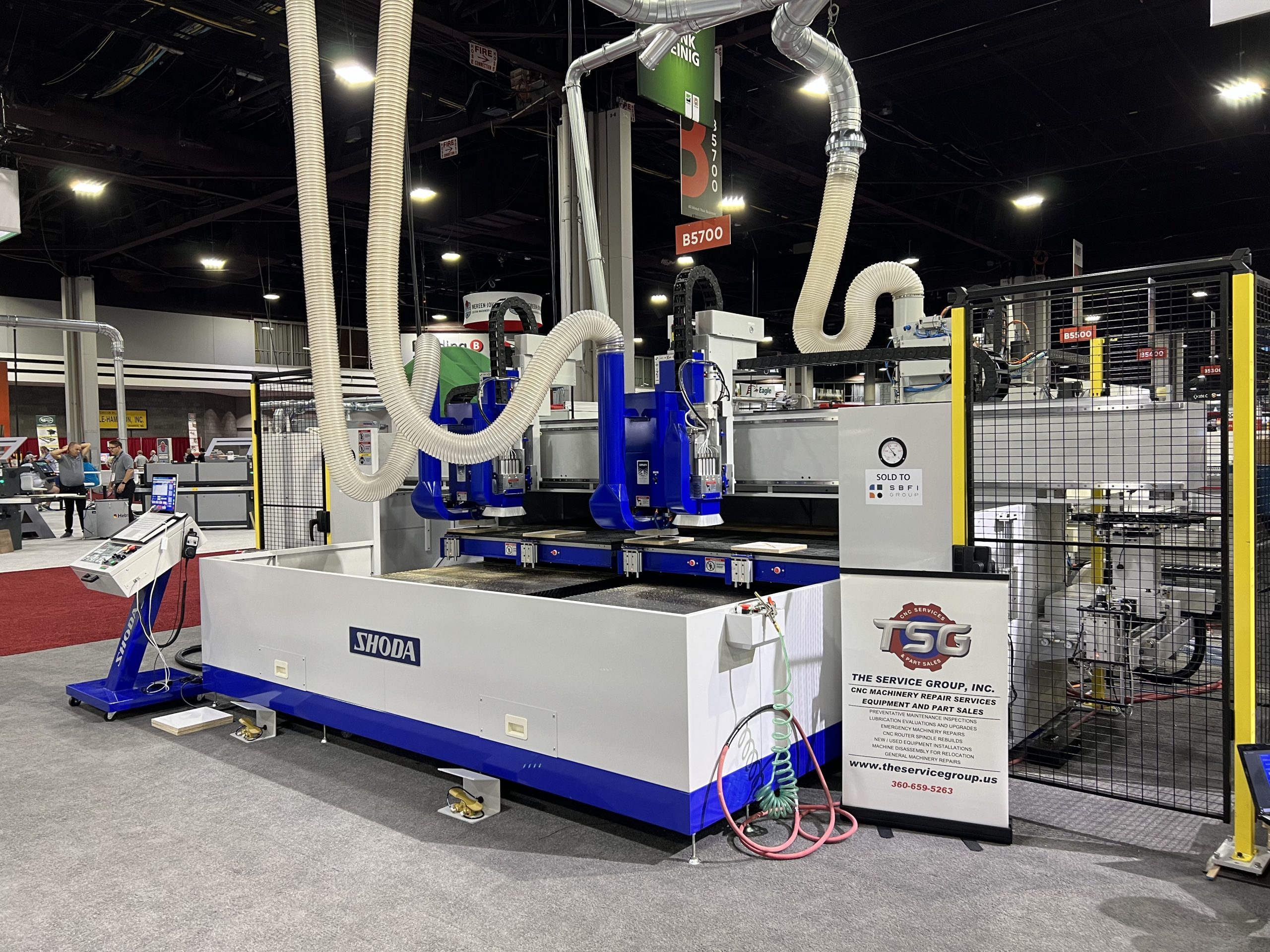
A Pioneer in Japanese CNC Router Technology
SHODA has been in business since 1926 and was the first company in Japan to develop an NC router. With a long history of precision machining, the company’s CNC routers are used to process a variety of materials—such as plastics, resins, and lightweight metals—with proven accuracy and reliability.
In 2014, SHODA developed a new type of NC router that doesn’t produce cutting dust. In many manufacturing environments, dust from machining can pose serious health risks if inhaled over long periods. SHODA’s solution to this issue has gained attention worldwide and is now used across the U.S., Europe, and Asia.