
CNC Router Guide » Applications of Japanese CNC Routers » CNC Routers for Monomer Cast Nylon (MC Nylon)
CNC Routers for Monomer Cast Nylon (MC Nylon)
Monomer Cast Nylon
Features: Strength, Wear Resistance, and Stability
Monomer-cast nylon known as MC nylon is valued for its high strength, excellent wear resistance, and low weight compared with metals. It combines impact resistance with durability, so it performs well in gears, sliders, and other load-bearing components.
MC nylon also offers good dimensional stability over time. Its low friction and natural “self-lubricating” behavior reduce maintenance needs in moving parts.
However, MC nylon has high moisture absorption. Humidity can cause slight dimensional changes. Understanding this property and reflecting it in design and machining conditions is the key to successful use.
Difference from Extruded Nylon
Nylon is commonly available as extruded or cast stock. Extruded nylon is cost-effective, but its molecular structure limits strength, wear resistance, and creep performance.
MC nylon is polymerized and shaped by casting from the monomer, producing higher molecular weight and improved mechanical properties. The result is higher strength, better wear and fatigue resistance, and more stable dimensions than typical extruded grades. This makes MC nylon the better choice for heavy loads and demanding environments.
Typical Applications
MC nylon is used for gears, bearings, sprockets, rollers, wear guides, and other motion components in industrial machinery. In automotive and agricultural equipment, it serves in auxiliary mechanisms and sliding parts. In food lines, polymer components help reduce the risk of metal wear debris, supporting cleaner operations.
With such a wide range of uses, MC nylon is expected to become even more important in the future.
Advantages of CNC Router Machining
High Precision for Complex Shapes
CNC routers excel at machining complex shapes with high precision. Small grooves, curves, and patterns that are hard to make by hand can be cut accurately with computer control. Automation keeps quality consistent and stable.
For monomer cast nylon, dimensional accuracy is often critical. Even a small deviation may affect the lifespan of a part or the performance of an entire machine. CNC routers help keep tolerances tight, which leads to reliable and long-lasting components. They are also suitable not only for mass production but also for prototypes and custom parts that require fine details.
Strong in Short Lead Times and Mass Production
Once programmed, a CNC router can reproduce the same shape repeatedly with consistent accuracy. This makes it highly suitable for large-scale production. Unlike injection molding, there is no waiting for mold fabrication. With the program and material ready, machining can begin immediately. With the program and material ready, machining can start right away, which shortens lead times.
In prototype development, only a few pieces may be needed. CNC routers handle small batches quickly, so design changes can be reflected immediately. This shortens the overall development cycle, reduces time to market, and lowers inventory risk.
Cost Reduction Without Molds
Traditional injection molding requires expensive and time-consuming mold production. For small-lot manufacturing, this cost burden is significant. CNC routers remove the need for molds, reducing the initial investment considerably.
Because block material is directly cut into shape, only the necessary number of parts can be produced within a short period. This avoids excess stock and cuts storage costs. The ability to adapt to small batches and many variants is a major advantage for manufacturers focused on cost control.
Suitable for Both Small and Large Parts
CNC routers can handle a wide range of sizes, from small precision components to large structural parts. MC nylon is lightweight yet strong, so even large parts are easier to machine and handle.
For small gears and bearings, CNC machining delivers high accuracy and long-term stability. For larger components, the combination of strength and low weight helps improve overall machine efficiency. This flexibility makes CNC routers a strong option for both prototypes and full-scale production.
Disadvantages of CNC Router Machining
Dimensional Changes from Heat and Humidity
MC nylon absorbs moisture and is sensitive to temperature and humidity. After machining, changes in the environment can cause slight dimensional shifts. For high-precision parts, this may lead to functional issues.
Moisture uptake can also affect strength and other mechanical properties. Proper storage and environmental control before and after machining are important. For exports or long-term storage, consider drying or sealed packaging. Compared with metals, this environmental dependency is a clear drawback.
Problems Caused by Heat During Machining
When machining MC nylon, frictional heat can build up. If not controlled, the resin may soften or deform, and dimensional accuracy can suffer. Thermal expansion and internal stress may also reduce part performance in use.
Careful temperature management is essential. Keep tools sharp and use suitable cooling or air blast to limit heat buildup. In some cases, post-machining annealing helps relieve internal stress and improve stability.
Challenges of the CNC Router Equipment
While CNC routers allow advanced machining, the machines themselves require significant investment and ongoing costs. Initial installation can be expensive, and skilled operators must learn CAD/CAM programming and equipment handling.
Running costs include tool replacement, scheduled maintenance, software updates, and power consumption. For small businesses in particular, these costs can be a heavy burden, and recovering the investment may take time. To maximize the benefits of CNC routers, long-term planning and stable production volume are required.
Setup Effort and Material Waste
CNC routers operate based on programmed instructions. When producing a new part, time and effort are needed to test and optimize the cutting conditions. During this trial process, scrap and material waste can occur. With expensive MC nylon, this directly raises costs.
In addition, preparing fixtures and setups can be time-consuming. For small-lot production, efficiency may drop. CNC routers are highly suitable for mass production or repeat jobs, but for multi-variety small batches, the setup effort can become a disadvantage.
Key Points and Considerations in Machining
Optimal Cutting Conditions
MC nylon is relatively hard for a plastic, so use sharp tools with suitable spindle speed and feed rate. In many cases, medium cutting speeds give more stable results than very high speeds.
Heat control is critical. Excessive heat can reduce accuracy and damage the surface. Oil-based coolants help maintain dimensions and keep the cut stable. Proper cooling also extends tool life.
Preventing Heat-Related Deformation
MC nylon is sensitive to temperature. During machining it can deform, expand, or even soften if heat builds up. Effective heat management is essential.
As tools wear down, frictional heat increases. Establishing an appropriate tool replacement cycle can prevent unnecessary heat buildup. In addition, annealing after machining is sometimes applied to release internal stress, improving dimensional stability over time.
Deburring and Surface Finishing
Machining MC nylon often creates burrs. Left untreated, they harm surface quality and can affect function, especially on gears and sliding parts.
Use dedicated deburring tools and follow with polishing to achieve a smooth finish. A finer surface lowers friction, reduces heat during operation, and extends part life. It also improves assembly accuracy and long-term reliability.
Importance of Secondary Processing and Inspection
After being cut by a CNC router, some parts require secondary processes such as tapping or drilling for assembly. Since MC nylon is more fragile with metal taps, special oversized taps and dedicated tools are recommended.
Inspection is just as important as machining. Measure key dimensions and check surface roughness to confirm that each part meets the specification. A defined inspection process ensures consistent, high-quality MC nylon components.
Conclusion
Monomer cast nylon is a high-strength, wear-resistant engineering plastic that is widely used across many industries. To take full advantage of its properties, a precise machining method is required, and CNC router processing is one of the most effective options. Since molds are not necessary, it is suitable for prototypes and small-lot production. At the same time, CNC routers are capable of handling complex shapes and even large components, making them highly versatile.
On the other hand, users should be aware of certain challenges such as dimensional changes caused by heat and moisture, as well as the tendency for burr formation. By selecting proper cutting conditions and applying the right post-processing methods, long-term stability and performance of the parts can be ensured. With continuous progress in CNC machining technology, the applications of monomer cast nylon are expected to expand even further in the future.
This media is sponsored by The SHODA Company
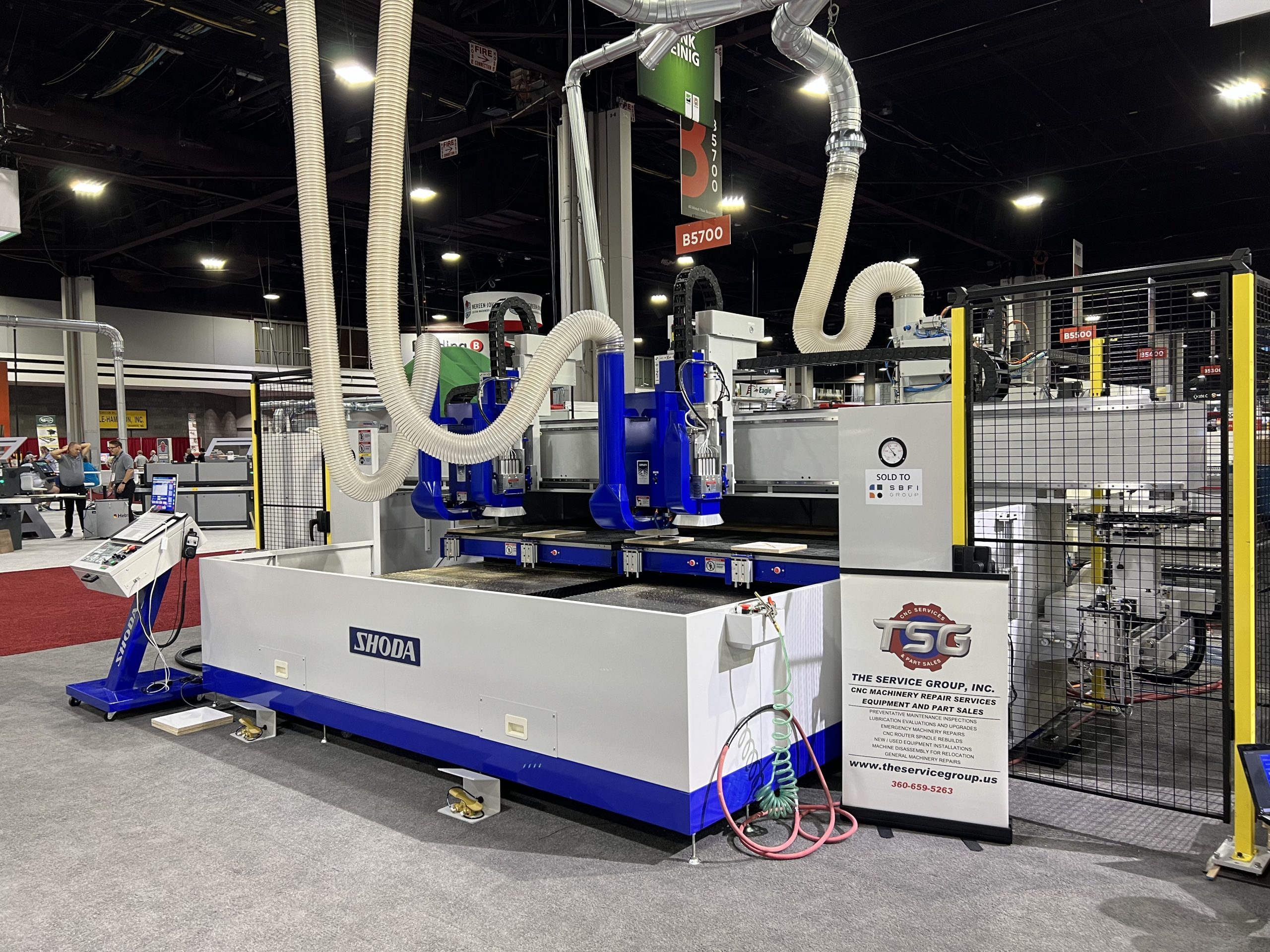
A Pioneer in Japanese CNC Router Technology
SHODA has been in business since 1926 and was the first company in Japan to develop an NC router. With a long history of precision machining, the company’s CNC routers are used to process a variety of materials—such as plastics, resins, and lightweight metals—with proven accuracy and reliability.
In 2014, SHODA developed a new type of NC router that doesn’t produce cutting dust. In many manufacturing environments, dust from machining can pose serious health risks if inhaled over long periods. SHODA’s solution to this issue has gained attention worldwide and is now used across the U.S., Europe, and Asia.