
Polymethyl Methacrylate (PMMA / Acrylic)
Polymethyl Methacrylate (PMMA), widely recognized by trade names such as Plexiglas®, Lucite®, and Perspex®, or colloquially as "acrylic," represents one of the most commercially significant synthetic polymers in modern manufacturing. Since its industrial debut in the 1930s, this transparent thermoplastic has become the industry standard for applications requiring the optical clarity of glass combined with the enhanced durability of polymers. With global demand exceeding millions of metric tons annually, PMMA is critical across diverse sectors, including automotive, aerospace, architecture, and medical technology.
For CNC machining professionals, acrylic is a unique material that reconciles high aesthetic requirements with structural rigidity. It serves as a lightweight, shatter-resistant alternative to silicate glass; however, it necessitates precise machining strategies to mitigate the risks of thermal melting or edge chipping. Mastery of PMMA—specifically the technical distinctions between cast and extruded grades—is paramount for achieving optical-grade finishes and maintaining tight tolerances.
What is PMMA?
Understanding the Basics
Polymethyl Methacrylate is a transparent thermoplastic homopolymer produced through the polymerization of the methyl methacrylate (MMA) monomer. As an amorphous polymer, its molecular chains are randomly arranged rather than organized into a crystalline structure. This lack of crystallinity provides acrylic with its exceptional optical clarity, allowing light transmission with negligible scattering or distortion.
While frequently compared to polycarbonate (PC), PMMA offers distinct technical advantages. Whereas polycarbonate is nearly unbreakable, acrylic is significantly harder and more scratch-resistant. It provides superior optical properties, remaining free from the slight tint often found in alternative transparent plastics. Although PMMA is a thermoplastic that softens when heated (with a glass transition temperature of approximately 105°C/221°F), it remains rigid and brittle at room temperature. This rigidity ensures excellent dimensional stability during machining, provided that cutting tools are sharp and vibration is controlled.
Manufacturing Process: Cast vs. Extruded
For fabricators utilizing CNC routers, distinguishing between "Cell Cast" and "Extruded" acrylic is the most critical factor in production planning. While these two grades may appear identical, their behavior under a cutting tool differs significantly due to their molecular structures.
Cell Cast Acrylic
Cell Cast Acrylic is a premium grade produced by pouring liquid monomer between two glass molds, where it cures and hardens gradually. This process results in a material with an extremely high molecular weight and minimal internal stress.
In terms of machining performance, cast acrylic is the preferred choice for CNC routing. Its higher melting point makes it less susceptible to resin buildup or welding onto the cutting tool. During machining, it produces crisp, non-tacky, flake-like chips that are easily evacuated. This leaves a smooth, frosted edge that simplifies subsequent polishing processes.
Extruded Acrylic
Extruded Acrylic is manufactured by pushing molten resin through a die and rollers. While generally more cost-effective and offering superior thickness tolerances across the sheet, the extrusion process introduces significant residual internal stress and results in a lower molecular weight.
Regarding machining characteristics, extruded acrylic has a lower thermal threshold. Without optimized feed rates and spindle speeds, frictional heat can cause the material to melt and re-fuse behind the cutter. It is also more susceptible to crazing (stress cracking) if exposed to aggressive solvents or coolants during or after the machining process.
Key Properties and Characteristics
Optical Properties
The defining attribute of PMMA is its unrivaled transparency. Clear acrylic sheet features a light transmission rate of 92%—the highest of any plastic and superior to standard float glass, which typically transmits approximately 90%. Unlike thick glass, which often exhibits a green tint due to iron content, acrylic remains optically neutral even in high-gauge blocks. This property, combined with a refractive index of 1.49, makes it an ideal material for light guides, lenses, and high-end display cases where visual fidelity is critical.
Mechanical Properties
Acrylic is a rigid material with a tensile strength ranging from 60 to 80 MPa (8,700–11,600 psi). While it lacks the extreme impact resistance of polycarbonate, PMMA is approximately 10 to 20 times more impact-resistant than glass of the same thickness. In the event of failure under extreme force, it fractures into large, dull-edged fragments rather than hazardous shards, enhancing safety in public installations. Its surface hardness is among the highest for thermoplastics (Rockwell M scale 80–100), offering significant scratch resistance, though it remains susceptible to abrasion from improper handling.
Chemical and Environmental Resistance
A primary advantage of PMMA is its inherent resistance to environmental degradation. Unlike many plastics that yellow or become brittle under UV radiation, high-quality acrylic is naturally UV stable and can withstand prolonged exposure to direct sunlight and precipitation without significant discoloration. Chemically, it resists inorganic acids, alkalis, and aliphatic hydrocarbons. However, fabricators must exercise caution: PMMA is sensitive to chlorinated hydrocarbons, ketones, esters, and aromatics. Exposure to alcohol-based cleaners or ammonia can cause immediate stress crazing, compromising the structural and aesthetic integrity of the part.
Thermal Properties
PMMA maintains performance across a temperature range of -40°C to 80°C (-40°F to 176°F), with a Heat Deflection Temperature (HDT) typically around 95°C (203°F) depending on the load. While unsuitable for high-heat industrial environments, these thermal characteristics make it excellent for thermoforming. Acrylic can be heated and formed into complex curves or vacuum-formed into deep-draw shapes while retaining its geometry upon cooling—a capability widely utilized in the production of sanitary ware and architectural glazing.
Common Applications and Uses
Signage, Lighting, and Retail Displays
The signage industry represents the primary consumer of PMMA sheet stock. Its capacity to diffuse LED light uniformly, paired with its availability in an extensive range of colors and opacities, makes it the industry standard for illuminated channel letters, lightboxes, and Point-of-Purchase (POP) displays. CNC routers are utilized extensively in this sector to execute intricate lettering, engrave corporate logos, and fabricate complex 3D geometries. Furthermore, the material’s edge-lighting properties are critical for modern exit signage and high-end decorative lighting panels.
Architecture and Glazing
Because it weighs less than half as much as glass while offering superior thermal insulation, acrylic is widely integrated into architectural glazing. Applications range from skylights and highway sound barriers to balcony guards and massive monolithic panels for public aquariums. Its clarity and structural integrity enable the use of viewing panels that would be prohibitively heavy or technically unfeasible with silicate glass. In greenhouse environments, specialized UV-transparent grades are employed to facilitate full-spectrum light transmission for optimal plant growth.
Automotive and Transportation
In the automotive sector, PMMA is utilized for exterior components requiring exceptional weather resistance and optical precision. Standard applications include taillight covers, indicator lenses, and pillar garnishes. The material’s high gloss and depth of color—frequently specified as "piano black" finishes—are increasingly favored for interior dashboards, trim components, and instrument clusters. In the aerospace industry, biaxially stretched acrylic is the established standard for aircraft windows and fighter jet canopies due to its shatter resistance and superior optical purity.
Medical and Healthcare
The biocompatibility and clarity of PMMA make it a foundational material in the medical field. It is utilized in the manufacturing of incubators, blood pumps, and cuvettes for clinical blood analysis. In dentistry, specialized PMMA grades are required for temporary crowns and denture bases. The material facilitates easy sterilization and remains chemically inert, meeting stringent hygiene standards without the risk of harmful leachates. Furthermore, orthopedic-grade acrylic serves as "bone cement" for the secure fixation of implants.
Advantages of PMMA (Acrylic)
Unmatched Weatherability
For outdoor applications, PMMA is the preeminent choice among transparent plastics. While polycarbonate requires specialized UV-protective coatings to prevent degradation, acrylic is naturally UV stable. This longevity results in significant life-cycle cost savings for outdoor signage and architectural elements, as the material retains its aesthetic and structural properties for decades.
Superior Machinability and Finishing
Acrylic is among the most machine-friendly polymers when paired with appropriate CNC equipment. High-performance routers can process PMMA with extreme precision. A distinct advantage of acrylic is its post-processing versatility: unlike many plastics that retain a rough edge after machining, acrylic can be flame polished, diamond polished, or buffed to restore total optical transparency. This capability is vital for high-end components where visible tool marks would compromise the final product.
Lightweight Strength and Safety
With a density of 1.18 g/cm³, acrylic is significantly lighter than glass (2.5 g/cm³). This weight reduction streamlines logistics, handling, and installation, particularly for large-scale architectural projects. It reduces the mechanical load on structural frames, allowing for more minimalist designs. Additionally, its shatter-resistant properties make it a safer alternative for educational, healthcare, and food-processing environments where glass fragmentation poses a significant liability.
Conclusion
Polymethyl Methacrylate (PMMA) remains the premier material for applications demanding the transparency of glass without the associated weight or fragility. Its unique combination of optical brilliance, UV stability, and processing versatility makes it a foundational component across the signage, automotive, and construction industries.
For manufacturers utilizing CNC technology, acrylic is a rewarding material to process—provided the technical distinctions between cast and extruded grades are respected and appropriate tooling strategies are implemented. Whether producing high-gloss retail displays or durable industrial instrument panels, PMMA delivers a preeminent finish that ensures long-term performance.
This media is sponsored by The SHODA Company
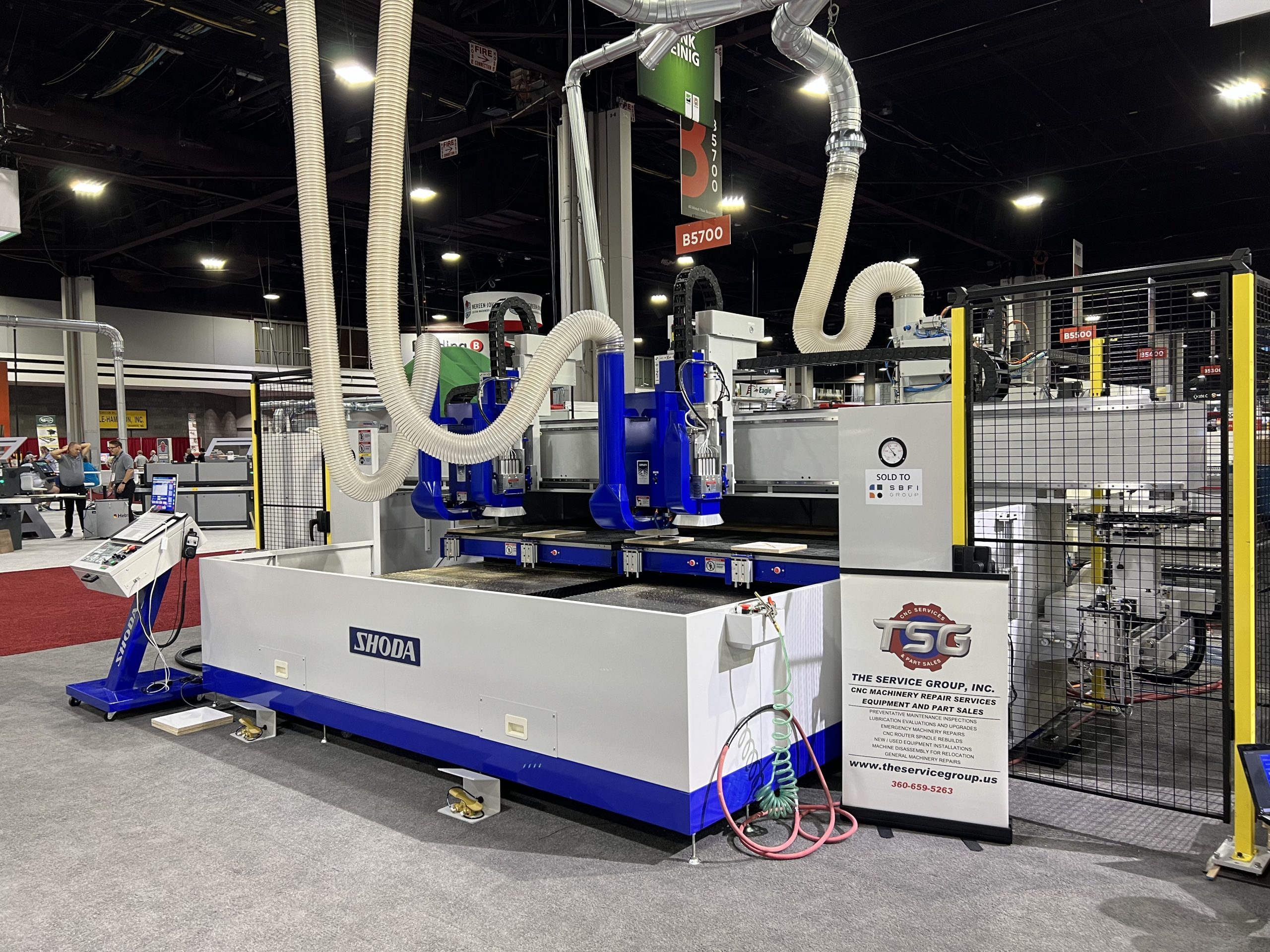
A Pioneer in Japanese CNC Router Technology
SHODA has been in business since 1926 and was the first company in Japan to develop an NC router. With a long history of precision machining, the company’s CNC routers are used to process a variety of materials—such as plastics, resins, and lightweight metals—with proven accuracy and reliability.
In 2014, SHODA developed a new type of NC router that doesn’t produce cutting dust. In many manufacturing environments, dust from machining can pose serious health risks if inhaled over long periods. SHODA’s solution to this issue has gained attention worldwide and is now used across the U.S., Europe, and Asia.