
CNC Router Guide » An Introduction to Japanese CNC Routers » Why U.S. Manufacturers Trust Japanese CNC Routers
Why U.S. Manufacturers Trust Japanese CNC Routers
Table of Contents
This section analyzes the current trends in the U.S. CNC router market and highlights how Japanese-made CNC routers are well-positioned to meet these evolving demands. It also outlines key considerations for companies looking to implement Japanese CNC routers in their operations.
Market Trends: CNC Routers in the U.S.
According to research by DataHorizzon, the U.S. CNC router market reached a value of $3.5 billion in 2023. The market is projected to grow at a compound annual growth rate (CAGR) of approximately 4.5%, reaching $5.3 billion by 2032. So what’s driving this expansion—and what challenges lie ahead as adoption accelerates?
Why the U.S. CNC Router Market Is Growing
Manufacturers in the United States are under increasing pressure to ensure consistent quality across production processes and reduce lead times. This has fueled a surge in demand for automation and labor-saving technologies.
As a result, CNC routers—which enable high-precision, high-speed machining—are being adopted at a faster pace. Advances in software integration, such as improved CAD/CAM connectivity and user-friendly interfaces, have also made CNC routers more accessible to small and mid-sized businesses, further contributing to market growth.
Challenges in the U.S. CNC Router Market
One of the most pressing challenges in the U.S. market is achieving the precision required to meet the demands of increasingly complex and advanced products.
Industries such as aerospace and automotive—where demand is growing rapidly—require extremely tight tolerance control, as even minor dimensional deviations can compromise overall product performance and safety.
Meanwhile, sectors like woodworking, architecture, and plastic processing are placing greater emphasis on design precision and finish quality. In these fields, high repeatability and stable machining performance are now essential expectations.
Source: DataHorizzon Research (https://datahorizzonresearch.com/cnc-router-market-3176)
Evaluation of Japanese CNC Routers in the U.S. Market
Japanese CNC routers are recognized in the U.S. for their ability to meet the evolving needs of the manufacturing industry. Here are three key factors driving their reputation:
Precision
Japanese CNC routers are engineered with high-rigidity structures and sophisticated control systems. With seamless CAD/CAM integration, they are designed to minimize dimensional errors to the greatest extent possible.
As a result, they deliver exceptional repeatability and stable performance, even when machining intricate components or complex geometries.
Durability
Durability is another major strength of Japanese CNC routers. Vibration resistance and structural rigidity are considered from the earliest design stages, ensuring minimal wear and high accuracy during long-term continuous operation.
Routine maintenance and part replacements are straightforward, and thanks to the use of high-quality components and strict assembly standards, these machines deliver reliable performance in U.S. production environments.
Technical Excellence
Japanese CNC routers are often designed with compact footprints and multifunctional capabilities, allowing a single unit to handle multiple tasks in limited factory space.
They incorporate advanced features such as 5-axis control, automatic tool changers (ATC), and IoT-enabled monitoring. This makes it easy to switch between different machining programs and part types, offering exceptional versatility. User interfaces are also designed for intuitive operation and enhanced safety.
Key Considerations When Implementing Japanese CNC Routers
When considering a Japanese CNC router, it’s important to focus on manufacturers or distributors with a proven track record of delivering to the U.S. market.
Customer reviews from actual users can also provide valuable insight. Look for feedback on machining precision, durability, built-in functions, local technical support, and warranty coverage when evaluating different options.
Summary: CNC Router Trends in the U.S.
The U.S. manufacturing industry is rapidly embracing automation and striving for high-quality, efficient production systems. As part of this shift, demand for CNC routers continues to grow—and the market is expected to expand in the years ahead.
Among the solutions meeting these high standards, Japanese CNC routers stand out as trusted, high-performance machines.
For manufacturers seeking to differentiate themselves from competitors and invest in more precise and efficient machining solutions, Japanese CNC routers—known for their precision, durability, and cutting-edge technology—are a compelling option worth serious consideration.
This media is sponsored by The SHODA Company
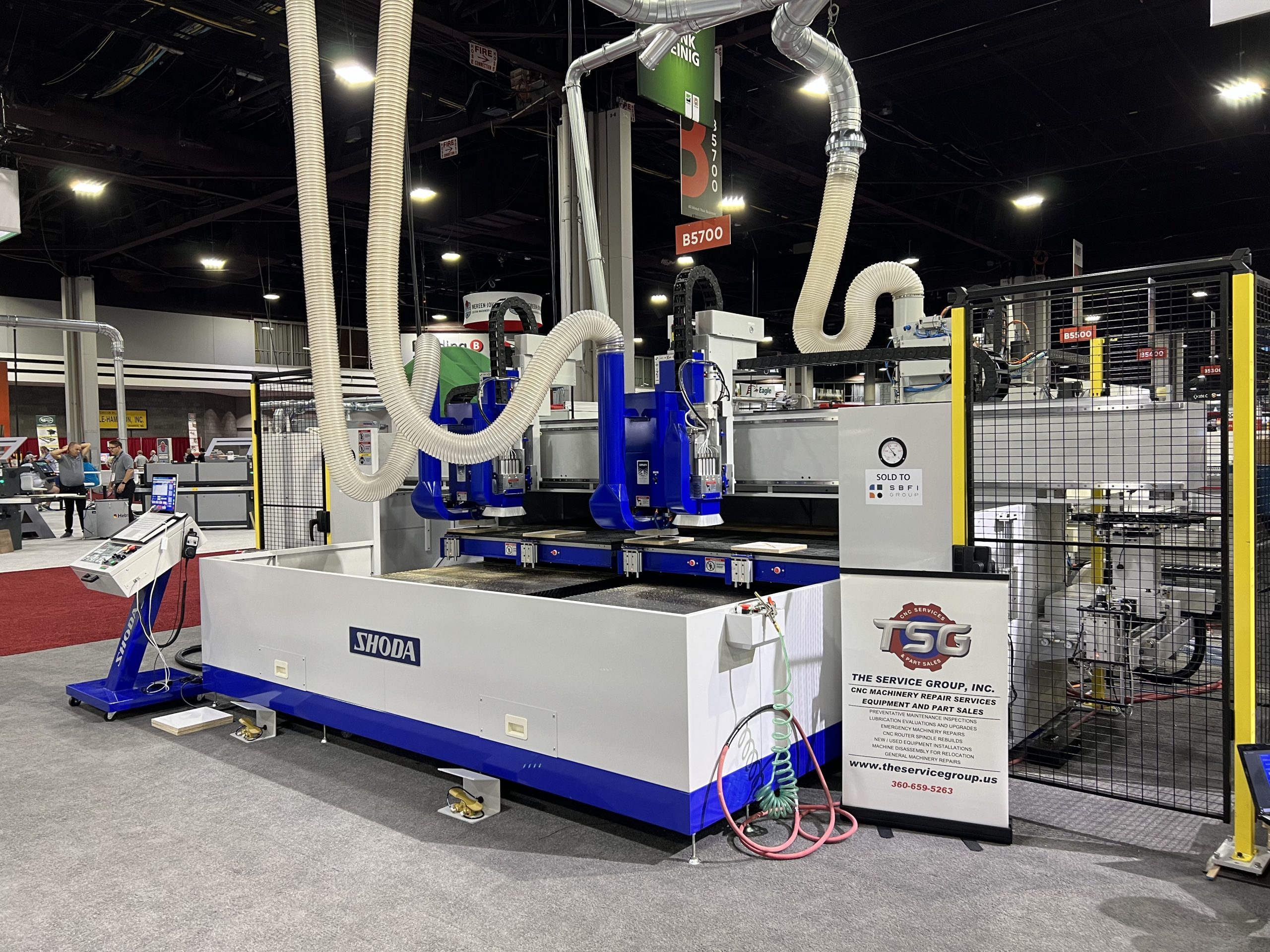
A Pioneer in Japanese CNC Router Technology
SHODA has been in business since 1926 and was the first company in Japan to develop an NC router. With a long history of precision machining, the company’s CNC routers are used to process a variety of materials—such as plastics, resins, and lightweight metals—with proven accuracy and reliability.
In 2014, SHODA developed a new type of NC router that doesn’t produce cutting dust. In many manufacturing environments, dust from machining can pose serious health risks if inhaled over long periods. SHODA’s solution to this issue has gained attention worldwide and is now used across the U.S., Europe, and Asia.