
CNC Router Guide » Applications of Japanese CNC Routers » G-10 and FR-4 Garolite for CNC Router Processing
G-10 and FR-4 Garolite for CNC Router Processing
G-10 and FR-4 are glass-reinforced epoxy laminates used in electrical insulation, structural components, fixtures, and other demanding industrial applications. Both materials combine woven glass fabric with an epoxy resin system, providing high mechanical strength, low moisture absorption, and dependable electrical performance.
A CNC router can cut, drill, pocket, and profile G-10 and FR-4. However, these laminates machine differently from common thermoplastics such as PVC, acrylic, and polyethylene. Their glass-fiber reinforcement is highly abrasive, and machining generates fine dust that requires careful control. Consistent production therefore depends on selecting the right tooling, workholding method, cutting parameters, and dust-collection system.
What Are G-10 and FR-4?
G-10 and FR-4 are rigid thermoset composite laminates. They are commonly available as sheets, plates, rods, and tubes, with sheet and plate stock being particularly well suited for CNC router machining.
These materials are widely used in industries that require electrical insulation, mechanical strength, dimensional stability, and consistent performance in humid or demanding operating environments.
How G-10 and FR-4 Laminates Are Made
G-10 and FR-4 are manufactured by impregnating layers of woven glass cloth with epoxy resin. The layers are then stacked and consolidated under heat and pressure to form a dense, rigid laminate. The glass reinforcement provides much of the material’s mechanical strength, while the cured epoxy bonds the layers and contributes to the laminate’s electrical and chemical properties.
Because G-10 and FR-4 are thermoset composites, they do not soften or melt during machining the way typical thermoplastics do. Excessive cutting heat can still damage the resin, degrade edge quality, and accelerate tool wear, making heat control an important part of the machining process.
What Does “Garolite” Mean?
Garolite is a trade name commonly associated with industrial laminate materials. In purchasing and machining environments, terms such as “G-10 Garolite” and “FR-4 Garolite” are often used to refer to glass-cloth epoxy laminates.
However, specifications should not be based on the Garolite name alone. Buyers should confirm the material grade, resin system, thickness tolerance, flame-retardancy requirements, and applicable standards with the supplier.
Are G-10 and FR-4 Phenolic Materials?
G-10 and FR-4 are sometimes grouped with phenolic laminates because suppliers and machine shops often place several thermoset laminate grades in the same product category. Technically, however, G-10 and FR-4 use an epoxy resin system rather than a phenolic resin.
This distinction is important because laminate grades can vary significantly in mechanical strength, electrical performance, heat resistance, moisture absorption, and machinability. Material selection should be based on the specified grade and its technical data rather than the broader term “phenolic.”
G-10 vs. FR-4: What Is the Difference?
G-10 and FR-4 have similar base constructions and share many mechanical and electrical properties. The primary difference is that FR-4 is formulated for flame-retardant performance.
FR-4 is therefore commonly selected for electrical and electronic applications in which flame resistance is a design or compliance requirement. G-10 may be appropriate when high strength and electrical insulation are required but a flame-retardant grade is not specified.
G-10: High Strength and Electrical Insulation
G-10 provides high mechanical strength, good rigidity, low moisture absorption, and dependable electrical insulation. It is used for structural and electrical components that must maintain their properties across a range of operating conditions.
Typical parts include spacers, washers, terminal boards, fixtures, sleeves, support plates, and mechanically loaded insulating components. The suitability of a specific G-10 product should always be evaluated against the requirements of the finished part.
FR-4: Flame-Retardant Glass-Epoxy Laminate
FR-4 is a glass-epoxy laminate designed for applications that require flame-retardant performance in addition to mechanical strength and electrical insulation. It is widely used in printed circuit boards, electrical barriers, control equipment, and insulating components.
The material designation alone does not confirm that every supplied sheet meets every applicable standard. Before approving an FR-4 grade for a regulated application, manufacturers should review the supplier’s technical data, test documentation, and certifications.
G-10 and FR-4 Comparison Table
| Property | G-10 | FR-4 |
|---|---|---|
| Base construction | Woven glass fabric with epoxy resin | Woven glass fabric with flame-retardant epoxy resin |
| Mechanical strength | High | High |
| Electrical insulation | Excellent | Excellent |
| Moisture absorption | Low | Low |
| Flame retardancy | Not a defining grade characteristic | A primary grade characteristic |
| Typical applications | Structural insulators, fixtures, washers, spacers, and mechanical components | Electrical insulation, circuit-related parts, arc barriers, and control equipment |
| Primary selection factor | Mechanical strength and electrical performance | Mechanical strength, electrical performance, and flame-retardancy requirements |
The two materials may have similar machining characteristics, but they are not automatically interchangeable. Grade selection should be based on the engineering drawing, purchasing specification, operating environment, and applicable standards.
Key Properties of G-10 and FR-4
G-10 and FR-4 are selected for applications that require a combination of mechanical and electrical performance. Their properties can make them practical alternatives to unreinforced plastics, natural-fiber laminates, and, in certain applications, metal components.
Actual property values vary by manufacturer, grade, thickness, reinforcement direction, and test method. Designers should use grade-specific supplier data for final engineering calculations.
High Mechanical Strength and Rigidity
The woven glass reinforcement gives G-10 and FR-4 greater strength and rigidity than many unreinforced plastics. This allows relatively thin components to carry mechanical loads while maintaining their shape.
These laminates are anisotropic, meaning their properties can vary by direction. Part orientation and load direction should therefore be considered when planning the material layout and CNC toolpaths.
Excellent Electrical Insulation
G-10 and FR-4 are widely used as electrical insulating materials. They can provide dependable dielectric performance in components that separate conductive parts or support electrical assemblies.
Common applications include terminal boards, busbar supports, switchgear components, transformer parts, and insulating spacers. Electrical performance varies with grade, thickness, temperature, moisture exposure, surface condition, and other application-specific factors.
Low Moisture Absorption
G-10 and FR-4 absorb relatively little water compared with many natural-fiber laminates and moisture-sensitive engineering plastics. This helps the materials maintain useful mechanical and electrical properties in humid environments.
Low moisture absorption also supports dimensional consistency. However, the full operating environment must still be evaluated, particularly when components will be exposed to immersion, aggressive chemicals, or significant temperature changes.
Dimensional Stability
The rigid laminate structure provides good dimensional stability for precision-cut plates, supports, fixtures, and insulating components. A stable CNC router and secure workholding can help maintain consistent hole patterns, profiles, and pocket dimensions.
Finished dimensions may still be affected by internal stress, sheet flatness, reinforcement direction, and material thickness. Inspection procedures should be developed around the tolerances and functional requirements of the finished part.
Chemical and Heat Resistance
The cured epoxy matrix provides resistance to many industrial substances and allows G-10 and FR-4 to operate at temperatures that may be unsuitable for some general-purpose plastics. Actual performance depends on the specific resin formulation and exposure conditions.
Chemical compatibility and maximum service temperature should be verified using grade-specific supplier data. A general material description is not sufficient for applications involving continuous heat exposure, aggressive chemicals, or safety-critical equipment.
Common Applications of G-10 and FR-4
G-10 and FR-4 are used in a wide range of electrical, industrial, transportation, and mechanical applications. CNC routing is particularly effective for components produced from flat sheet or plate that require repeatable profiles, slots, holes, or pockets.
Material selection depends on factors such as mechanical loading, electrical function, flame-retardancy requirements, operating temperature, chemical exposure, and documentation requirements.
Electrical and Electronic Components
Common electrical applications include terminal boards, insulating panels, arc barriers, switch components, transformer parts, and supports for conductive assemblies. FR-4 is often specified when flame-retardant performance is required.
A CNC router can machine repeated hole patterns, cutouts, pockets, and external profiles in a single setup. This makes the process well suited for components with multiple mounting features or frequent design variations.
Industrial Insulators and Structural Components
G-10 and FR-4 are used for sleeves, washers, spacers, supports, mounting plates, and other components that require both electrical isolation and mechanical strength.
Unlike metal components, these laminates are electrically nonconductive. Designers must still account for fastener loads, edge distance, reinforcement direction, and the potential for localized damage around machined holes.
Aerospace, Automotive, and Mechanical Components
Glass-epoxy laminates are used in specialized transportation and mechanical applications where low weight, mechanical strength, electrical insulation, and dimensional stability are important.
Examples include equipment supports, test fixtures, assembly aids, brackets, and electrically isolated structural components. Material traceability and industry-specific documentation should be verified before a grade is approved for use.
Jigs, Fixtures, Handles, and Custom Components
G-10 is also used for jigs, fixtures, tool handles, equipment plates, and custom machine components. Its rigidity and wear resistance can make it suitable for parts exposed to repeated handling or mechanical contact.
CNC routing allows these components to be machined directly from sheet stock without dedicated molds. When hole locations, profiles, or clearances change, the design can be updated through the CAD/CAM program.
Can G-10 and FR-4 Be Machined with a CNC Router?
Yes. A CNC router can perform profile cutting, drilling, slotting, pocketing, engraving, and other operations on G-10 and FR-4 sheet or plate. Routing is particularly effective for flat components with complex outlines or multiple internal features.
Successful machining requires more than adequate spindle power. The machine and cutting process must control vibration, tool wear, workpiece movement, dust, and the cutting forces applied to the laminate. Poor process control can lead to chipped edges, delamination, inaccurate features, and inconsistent surface quality.
Challenges of CNC Routing G-10 and FR-4
G-10 and FR-4 are machinable, but they are less forgiving than many common plastics. The same glass fibers that provide mechanical strength also create significant abrasion during cutting.
Production planning should account for tooling, dust collection, workholding, inspection, and tool-life management from the outset.
Abrasive Glass Fibers and Rapid Tool Wear
Glass fibers are highly abrasive and can dull cutting edges much faster than unfilled plastics. As a tool wears, cutting forces may increase, edges may become rougher, more heat may be generated, and the risk of delamination may rise.
Tool-life expectations should be established through controlled testing. In repeat production, operators should monitor edge quality, spindle load, dimensional results, and other indicators of wear rather than waiting for the tool to fail completely.
Fine Dust and Airborne Particles
Machining glass-epoxy laminates can generate fine resin and glass-fiber dust. If this dust escapes into the work area, it can affect workplace cleanliness, machine components, and worker exposure.
Dust should be captured as close to the cutting point as practical. Facilities should also review the material’s safety data sheet and follow applicable industrial hygiene procedures for ventilation, housekeeping, personal protective equipment, and waste handling.
Delamination, Chipping, and Edge Quality
G-10 and FR-4 are layered materials. Unsupported cutting forces, worn tools, excessive tool engagement, or unsuitable entry and exit strategies can chip the laminate or cause the layers to separate near an edge.
Toolpaths should be designed to minimize sudden loads on the material. Adequate support, appropriate cutter geometry, controlled depth of cut, and stable workholding can improve edge quality and reduce damage around holes and narrow features.
Heat Buildup and Resin Damage
Although G-10 and FR-4 do not melt like thermoplastics, excessive heat can still damage the epoxy resin and shorten tool life. Heat may be caused by rubbing, dull cutting edges, poor dust evacuation, or unsuitable cutting parameters.
The goal is to maintain an efficient cutting action rather than allowing the tool to rub against the laminate. Spindle speed, feed rate, tool diameter, flute geometry, and depth of cut should be evaluated as a complete cutting system.
Secure Workholding for Thin Sheets and Small Parts
Thin sheets and small components can lift, vibrate, or shift during routing. Any movement can reduce dimensional accuracy and may damage the workpiece or cutting tool.
Depending on the application, workholding may involve vacuum tables, mechanical clamps, custom fixtures, backing boards, tabs, or a combination of methods. The most suitable approach depends on sheet size, material thickness, part geometry, cutting sequence, and the amount of support remaining around each component.
Best Practices for Machining G-10 and FR-4
No single set of cutting parameters will work for every G-10 or FR-4 application. Appropriate conditions depend on the material grade, laminate thickness, cutting tool, machine, workholding method, required finish, and part geometry.
A controlled test cut is the most practical starting point. The results can then be inspected and the process adjusted before full production begins.
Select Tooling for Abrasive Composite Materials
Depending on production volume and finish requirements, suitable options may include carbide, coated carbide, diamond-coated, and other tools designed for composite materials. Cutter geometry should support clean cutting and efficient removal of dust and chips.
The lowest-priced tool is not always the most economical option. Tool life, changeover time, rejected parts, cycle time, and edge quality should all be considered when comparing overall tooling costs.
Optimize Spindle Speed, Feed Rate, and Depth of Cut
Spindle speed and feed rate should produce an appropriate chip load for the selected cutter. Excessive spindle speed combined with a low feed rate can cause rubbing and heat buildup, while overly aggressive parameters may increase cutting forces or damage the laminate.
Depth of cut and overall tool engagement should also be evaluated. Multiple controlled passes may provide more stable results than a single heavy pass, particularly when machining thick plates or delicate features.
Control Dust at the Cutting Point
An effective extraction system should capture dust at or near the cutting tool before it spreads across the machine or enters the surrounding work area. Enclosures, dust hoods, brushes, and localized extraction can all contribute to a cleaner machining process.
Dust-control performance should be evaluated under actual cutting conditions. Collection efficiency can vary with tool position, part geometry, airflow, material thickness, and the volume of dust generated.
Support the Workpiece to Reduce Delamination
A rigid, level support surface helps reduce vibration and protects the lower face as the tool exits the material. Backing boards or sacrificial surfaces may be used for through-cutting and drilling operations.
The cutting sequence should preserve support around small or narrow components for as long as practical. Tabs, bridges, or staged machining can help keep finished parts from moving before the cycle is complete.
Monitor Tool Life and Inspect Edge Quality
Tool wear may appear as a gradual decline in edge quality rather than a sudden failure. Regular inspection can reveal fraying, chipping, discoloration, dimensional drift, increased burr formation, and other signs of wear.
Once sufficient production data has been collected, manufacturers can establish a preventive tool-replacement schedule. Tool-life monitoring is particularly valuable when dimensional consistency and uninterrupted production are priorities.
Advantages of CNC Routing G-10 and FR-4
CNC routing offers a flexible way to turn G-10 and FR-4 sheet stock into finished or near-finished components. Profiles, holes, slots, pockets, and other features can be machined from the same digital program, reducing the need for separate cutting and drilling operations.
The process is suitable for prototypes, replacement parts, design variations, and repeat production. It delivers the greatest value when the machine provides stable motion, accurate positioning, secure workholding, and effective dust control.
Efficient Processing of Sheet Materials
A CNC router can arrange multiple components across a sheet and machine their profiles, holes, slots, and pockets in a coordinated sequence.
Careful nesting can improve material utilization, while consistent workholding helps reduce setup variation. Production efficiency depends on balancing nesting density with adequate part support and sufficient spacing between components.
Repeatable Holes, Profiles, and Pockets
Digital toolpaths allow repeated features to be machined at controlled locations. This is especially useful for insulating panels, terminal boards, fixtures, and structural components with detailed hole patterns.
Repeatability still depends on tool condition, machine accuracy, material stability, and workholding. Even an accurate program cannot compensate for a worn cutter or an unstable workpiece.
Flexible Production Without Dedicated Molds
CNC routing does not require a dedicated mold for each part design. This reduces the initial tooling investment for prototypes, custom components, and low- to medium-volume production.
The economics vary by part design and production volume. For flat laminate components with frequently changing designs, CNC routing can provide a practical balance of flexibility and repeatability.
Faster Design Changes for Prototypes and Custom Parts
When a prototype requires a different profile, clearance, or hole location, the CAD model and toolpath can be revised without replacing a forming mold.
This allows manufacturers to evaluate design changes more quickly. Each revision should still be reviewed for tool access, minimum feature size, edge distance, workholding, and inspection requirements.
How to Choose Between G-10 and FR-4
Material selection should begin with the part specification rather than the machining process. G-10 and FR-4 can be routed using similar methods, but the final application may require one grade instead of the other.
Key considerations include flame retardancy, electrical insulation, mechanical loading, environmental exposure, certification requirements, and cost.
Choose G-10 When Flame Retardancy Is Not Required
G-10 may be suitable for structural insulators, fixtures, spacers, washers, and custom mechanical components that require mechanical strength and electrical insulation without a specified flame-retardant rating.
Designers should verify that the selected grade meets all operating requirements. G-10 should not be substituted for FR-4 when the engineering drawing, customer specification, or safety requirement calls for a flame-retardant material.
Choose FR-4 for Flame-Retardant Electrical Applications
FR-4 is generally the more appropriate choice when flame-retardant performance is required in addition to mechanical strength and electrical insulation.
Common applications include electrical barriers, control-equipment components, circuit-related parts, and other insulating structures. The applicable standard and required supporting documentation should be identified before the material is purchased.
Confirm Grade-Specific Standards and Certifications
Material names are not substitutes for certificates, test reports, or supplier data. Products sold under the same general grade designation may differ in available thicknesses, tolerances, color, temperature performance, and compliance documentation.
Manufacturers should confirm the applicable specification, flame rating, traceability, and any industry-specific requirements with the material supplier. This is particularly important for regulated or safety-related components.
What to Look for in a CNC Router for G-10 and FR-4
A CNC router for G-10 and FR-4 should be evaluated as a complete production system. Spindle performance matters, but so do machine rigidity, positioning accuracy, dust collection, workholding, tool management, and process monitoring.
The appropriate configuration depends on part size, material thickness, required tolerances, cycle time, production volume, and the facility’s dust-management requirements.
Machine Rigidity and Positioning Accuracy
A rigid machine structure helps control vibration and maintain a stable relationship between the cutting tool and the workpiece. This supports consistent dimensions and cleaner edges.
Positioning accuracy is particularly important for components with repeated holes, tight clearances, or features machined in multiple operations. Machine performance should be evaluated under actual cutting loads rather than based on nominal specifications alone.
Spindle Performance and Tool Compatibility
The spindle should support the speed range, tool diameters, collet systems, and cutting loads required for machining glass-epoxy laminates. Low spindle runout helps distribute tool wear more evenly and maintain consistent feature quality.
Tool compatibility should also account for practical requirements such as available cutter lengths, automatic tool changing, tool presetting, and replacement intervals.
Effective Dust Collection and Containment
Because G-10 and FR-4 generate fine, abrasive dust, dust-collection capability should be treated as a core machine-selection factor. Capturing dust near the cutting point helps maintain a cleaner work area and protect moving machine components.
Buyers should evaluate how the dust hood or enclosure performs across the machine’s full working area. A system that performs well in one tool position may be less effective around tall fixtures or complex part geometries.
Reliable Workholding for Sheet Materials
Vacuum workholding can be effective for large, flat sheets, while mechanical clamps or dedicated fixtures may be required for thick plates, small blanks, or parts with limited surface area.
The machine should support a workholding method appropriate for the part. Stable support becomes especially important as profiles are completed and individual components separate from the surrounding sheet.
Tool-Life Monitoring and Production Stability
Production machining requires more than completing a successful test part. The process must maintain acceptable quality as tools wear and material lots change.
Tool-life tracking, spindle-load monitoring, inspection planning, and preventive maintenance can help reduce unexpected downtime. These capabilities become increasingly important during unattended machining cycles and repeat production.
CNC Routers for Glass-Epoxy Laminate Processing
G-10 and FR-4 combine high mechanical strength, electrical insulation, low moisture absorption, and dimensional stability. These properties make them valuable industrial materials, but their abrasive glass reinforcement and fine machining dust require careful process planning.
A CNC router can efficiently produce profiles, holes, slots, pockets, and custom shapes from G-10 and FR-4 sheet stock. To achieve consistent results, manufacturers should prioritize machine rigidity, suitable tooling, stable workholding, cutting-point dust collection, and tool-life management.
When comparing CNC routers, consider the specific laminate grade, sheet dimensions, part geometry, required tolerances, production volume, and workplace requirements. A machine configured around these factors can support cleaner, more accurate, and more repeatable glass-epoxy laminate machining.
This media is sponsored by The SHODA Company
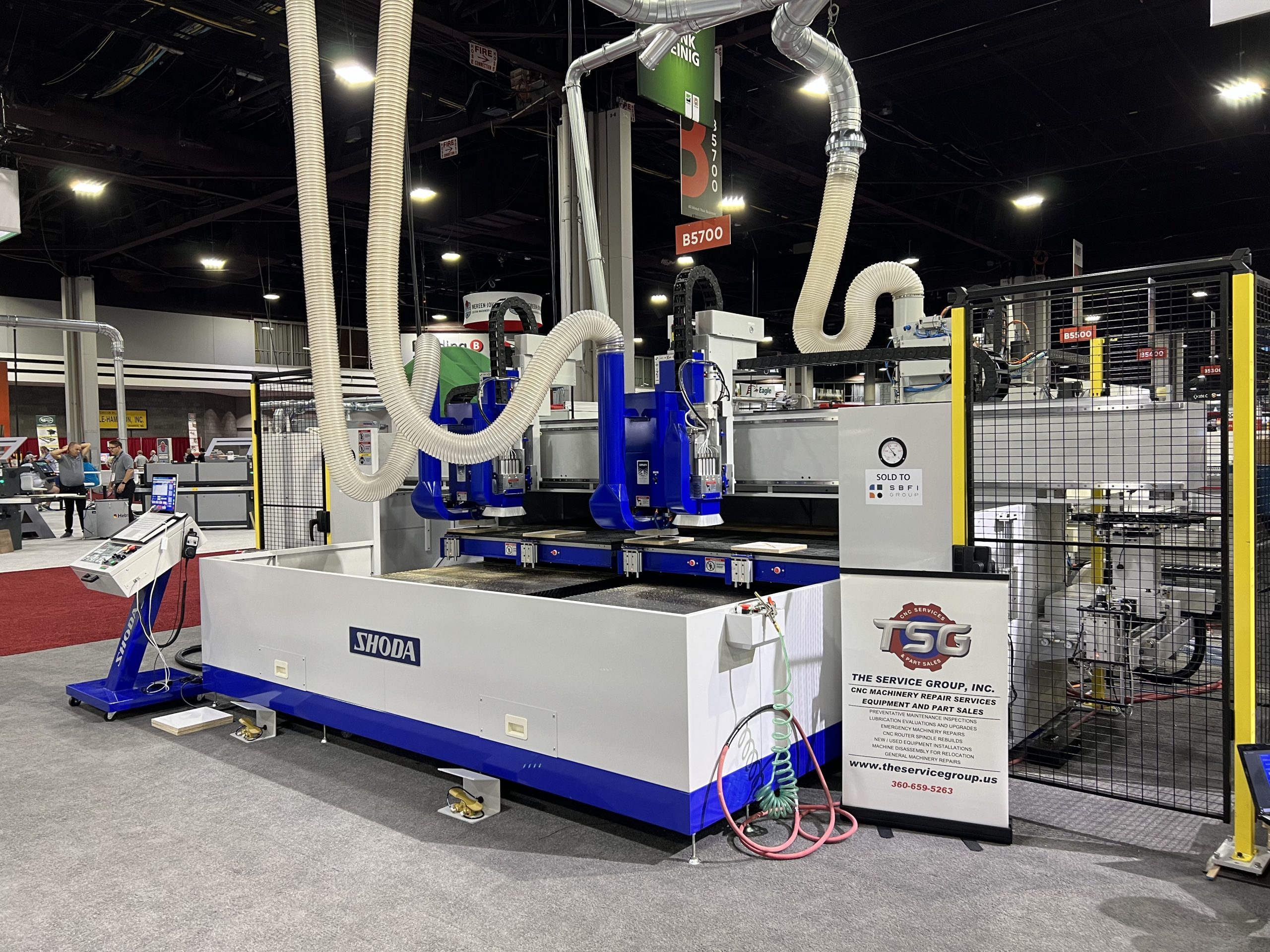
A Pioneer in Japanese CNC Router Technology
SHODA has been in business since 1926 and was the first company in Japan to develop an NC router. With a long history of precision machining, the company’s CNC routers are used to process a variety of materials—such as plastics, resins, and lightweight metals—with proven accuracy and reliability.
In 2014, SHODA developed a new type of NC router that doesn’t produce cutting dust. In many manufacturing environments, dust from machining can pose serious health risks if inhaled over long periods. SHODA’s solution to this issue has gained attention worldwide and is now used across the U.S., Europe, and Asia.