
CNC router for LDPE
Table of Contents
Key Takeaways
- LDPE requires careful heat and chip control to avoid melting and tool clogging.
- Choose a rigid router with precise speed, feed, chip evacuation, and workholding.
- Review older equipment when quality, throughput, or reliability becomes inconsistent.
- Verify suitability through test cuts using the actual material and geometry.
Challenges in Machining Low-Density Polyethylene
Heat Buildup Can Melt the Material and Clog the Router Bit
Friction can soften or melt LDPE around the cutting edge. Melted material may adhere to the bit, increase heat, and damage the finished edge.
Low Rigidity Can Cause Deflection and Dimensional Errors
Because LDPE is flexible and less rigid than many engineering plastics, cutting forces can bend the workpiece, causing dimensional variation and uneven machining depth.
Flexible Workpieces Require Stable and Evenly Distributed Workholding
Thin or flexible sheets may lift, shift, or vibrate during routing. Support must be distributed across the workpiece without creating clamp marks or distortion.
Poor Chip Evacuation Can Lead to Chip Rewelding and Rough Edges
Chips left near the cutting edge retain heat and may fuse back onto the material. Recirculating chips can also scratch surfaces and obstruct the bit.
Elastic Recovery Makes Tight Tolerances Harder to Maintain
LDPE may compress or bend under cutting pressure, then recover after the tool passes. This movement makes tight dimensions and repeatable edge profiles more difficult.
Dull or Unsuitable Tools Can Cause Tearing and Burrs
A dull edge generates rubbing instead of clean cutting. Incorrect flute geometry can pull or smear the material, leaving burrs, torn edges, or an uneven finish.
Essential CNC Router Features for Machining LDPE
Precise Spindle Speed and Feed Rate Control
The router should allow fine adjustment of spindle speed and feed rate. This helps operators maintain effective chip formation instead of rubbing and overheating LDPE.
A Rigid Frame and Low-Vibration Motion System
A rigid frame and stable motion system reduce vibration under changing cutting loads. This supports consistent dimensions, machining depth, and edge quality across production runs.
Accurate CNC Control for Consistent Chip Load and Toolpaths
Accurate CNC control coordinates spindle speed, feed, acceleration, and tool movement. Consistent motion helps maintain the intended chip load through straight cuts, corners, and curves.
Effective Chip Evacuation and Air-Cooling Capability
Air blow and chip extraction should clear material from the cutting zone before it recirculates. Removing chips also carries away heat generated during machining.
Workholding Options for Soft and Flexible Sheets
Vacuum tables, mechanical clamps, and combined table systems provide options for different sheets and parts. Holding force must secure LDPE without bending or marking it.
Compatibility With Plastic-Specific Cutting Tools
The spindle and toolholder should accept suitable plastic-cutting tools with sharp edges and effective flute geometry. Appropriate tooling improves chip formation while reducing unnecessary cutting pressure.
Programmable Ramping, Lead-Ins, and Multi-Pass Cutting
Programmable entries, exits, and pass strategies let operators avoid abrupt plunges and control tool engagement. These functions support chip evacuation and reduce local heat buildup.
Process Controls for Consistent LDPE Part Quality
Select a Sharp Router Bit With Suitable Flute Geometry
Use a sharp cutter designed for plastics. A polished flute and geometry help create clean chips, reduce cutting pressure, and limit buildup on the tool.
Balance Spindle Speed, Feed Rate, and Chip Load
Set feed rate and spindle speed together rather than adjusting one value alone. The goal is to form chips cleanly while preventing rubbing and excessive heat.
Set the Depth of Cut and Number of Passes for the Workpiece
Choose cutting depth and pass count according to material thickness, tool diameter, rigidity, and finish. Avoid passes that make the tool rub without cutting effectively.
Use Toolpaths That Support Heat and Chip Removal
Plan entries, exits, and cutting directions so chips have an escape path. Ramping into the material can reduce chip packing compared with a direct plunge.
Secure the Workpiece Without Causing Deformation
Support the sheet across its surface and apply only the holding force required. Excessive clamping can deform LDPE before machining begins and introduce dimensional error.
Verify the Process With Test Cuts and Dimensional Inspection
Use the actual LDPE grade for trial cuts, then inspect dimensions, edges, and surface quality. Record settings so results can be reproduced by different operators.
Signs That Your Current CNC Router May Be Limiting Production
Cut Quality Varies Between Operators or Production Runs
If identical programs produce different results between shifts, machine condition, setup variation, or manual adjustments may be undermining process consistency.
The Machine Cannot Maintain the Required Tolerances
Repeated dimensional drift may indicate backlash, vibration, motion-control limitations, or unstable workholding. These issues become critical when customers request tighter tolerances.
Chip Buildup and Heat-Related Defects Occur Repeatedly
Frequent melting, chip rewelding, or clogged tools may show spindle control, air blow, or chip extraction is inadequate.
Existing Workholding Cannot Secure New Part Sizes or Geometries
Existing tables or fixtures may not secure larger, thinner, or more flexible LDPE workpieces without allowing movement, lifting, or deformation.
Manual Adjustments Are Reducing Throughput
When operators pause production to clear chips, change settings, or correct workholding, manual intervention increases cycle time and labor requirements.
Downtime and Maintenance Issues Are Affecting Delivery Reliability
Unexpected stoppages, scarce replacement parts, and recurring repairs can reduce available capacity. Maintenance uncertainty makes delivery schedules harder to protect.
New Customer Requirements Exceed the Machine’s Capabilities
A machine that met specifications may not support tighter tolerances, complex geometries, higher volumes, or process records requested by customers.
How to Evaluate a Replacement CNC Router for LDPE Machining
Define the Required Tolerances and Surface Finish
Translate drawings into measurable selection criteria, including dimensional tolerances, flatness, edge condition, and surface finish requirements for each representative part.
Confirm the LDPE Grade, Thickness, and Workpiece Dimensions
Different LDPE grades can behave differently during machining. Document the grade, thickness, sheet format, and workpiece dimensions before comparing machines.
Match the Working Area and Axis Travel to Current and Future Parts
Check table dimensions and X, Y, and Z travel against existing parts, planned contracts, fixture space, and future production requirements.
Evaluate Spindle Range, Feed Control, and Machine Rigidity
Evaluate whether spindle range, feed control, acceleration, and structural rigidity can maintain stable cutting conditions across intended tools and operations.
Check Chip Evacuation, Cooling, and Workholding Options
Confirm that air blow or extraction can remove chips effectively and table or fixture options can hold LDPE without distortion.
Compare Tool Capacity, Automation, and Production Throughput
Compare automatic tool changing, multi-head options, setup time, and cycle time against production volume, staffing, and machining processes required.
Review Software, Maintenance, and After-Sales Support
Assess programming tools, production monitoring, operator support, maintenance access, parts availability, and service coverage over the machine’s expected working life.
Request a Test Cut Using the Actual Workpiece Material
Before purchasing, machine a part from the LDPE grade. Inspect dimensions and finish, then confirm cycle time and tooling requirements.
How SHODA CNC Routers Support Plastic Machining Requirements
SHODA develops CNC routers for plastic machining with capabilities that address many of the challenges discussed above. Depending on the model and configuration, available features include precise spindle control, rigid machine construction, enhanced air blow, and workholding options for different sheet sizes and part geometries. Together, these capabilities support effective chip removal, stable cutting, secure workholding, and consistent machining conditions.
SHODA offers machine configurations for different workpiece sizes, production volumes, and machining requirements, as well as software that supports machine operation, production, and maintenance. Its application-specific consultation also helps manufacturers evaluate factors such as material properties, required tolerances, production targets, and installation conditions when planning a machine replacement.
Because LDPE grades, thicknesses, part shapes, and quality requirements vary, the appropriate machine specifications and cutting conditions should be confirmed for each application. Talk to SHODA about your LDPE parts and production goals, then review the following CNC router options as potential starting points for your replacement project.
SHODA CNC Router Options for Different Production Requirements
NCN8210 for High-Precision Industrial Plastic Parts
The NCN8210 combines an AC spindle with Center-Through Air Blow II to remove chips and support smooth surfaces. Its deep table accommodates machining directly from raw plastic sheets.
NC260 for Higher-Volume Production of Smaller Plastic Parts
The NC260 uses two heads to produce two parts in one machining cycle. Its compact design, high-frequency spindle, and five-tool automatic changer suit efficient small-part production.
NC2001 for Stable Machining of Plastic Sheets
The NC2001 combines a rigid structure, optimized servo settings, and dust collection to support stable, high-speed machining. Its table size suits production from larger plastic sheets.
Confirm each model with your LDPE grade and required tolerances.
Frequently Asked Questions About CNC Routing LDPE
Can LDPE Be Machined With a CNC Router?
Yes, with proper heat, chip evacuation, tooling, and workholding control.
What Type of Router Bit Is Suitable for LDPE?
Use sharp plastic-cutting tools with flutes that evacuate chips efficiently.
How Can You Prevent LDPE From Melting During Routing?
Balance speed and feed, keep tools sharp, and evacuate chips.
Should Coolant Be Used When Machining LDPE?
Often, compressed air is sufficient; confirm any coolant is material-compatible.
How Should Thin LDPE Sheets Be Secured?
Use full-surface support, vacuum holding, or carefully distributed mechanical clamps.
How Do You Determine the Right Spindle Speed and Feed Rate?
Calculate chip load, then refine settings through documented test cuts.
Discuss Your LDPE Machining Requirements With SHODA
Share your LDPE grade, part drawings, quality requirements, and production targets with SHODA. A consultation and test cut can help identify the specifications needed for your replacement CNC router.
This media is sponsored by The SHODA Company
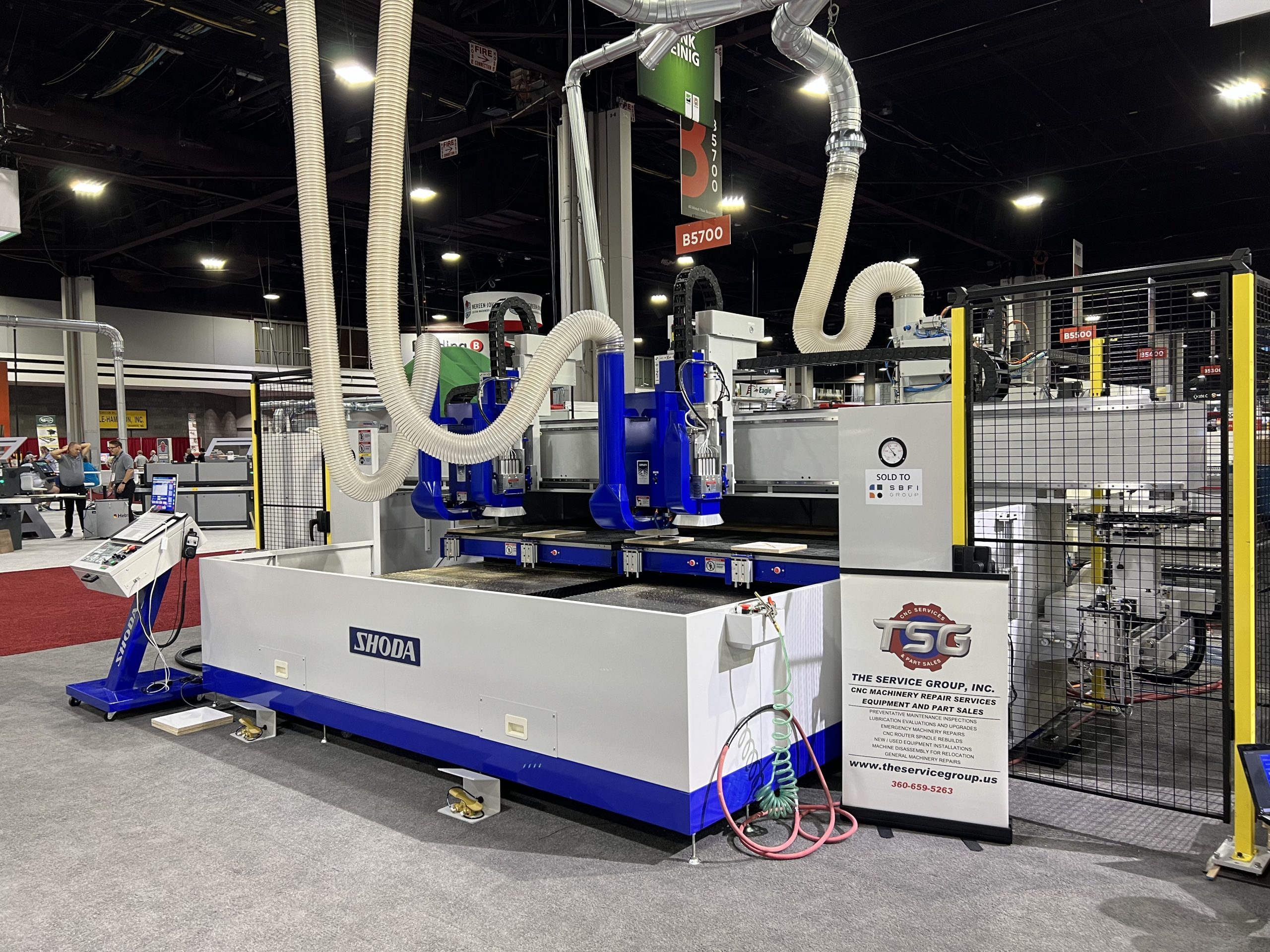
A Pioneer in Japanese CNC Router Technology
SHODA has been in business since 1926 and was the first company in Japan to develop an NC router. With a long history of precision machining, the company’s CNC routers are used to process a variety of materials—such as plastics, resins, and lightweight metals—with proven accuracy and reliability.
In 2014, SHODA developed a new type of NC router that doesn’t produce cutting dust. In many manufacturing environments, dust from machining can pose serious health risks if inhaled over long periods. SHODA’s solution to this issue has gained attention worldwide and is now used across the U.S., Europe, and Asia.